Showing posts with label Le Bistrot du Paradou. Show all posts

Thursday, September 24, 2015

Le Bistrot du Paradou


Le Bistrot du Paradou is as authentic as possible when it comes to a real French bistro. Located in the small and idyllic village of Paradou, it’s about a 15 minute drive from Saint-Remy-de-Provence and well within driving distance from Arles or Avignon. Another reason to visit is it's one of cookbook author Patricia Wells’ favorite bistros. Patricia Wells is well known throughout Provence and divides her time between Paris and her lovely farmhouse and cooking school in the Var department of Provence.

For better viewing, click photos to enlarge.


This quintessential French bistro is an institution that is loved and adored not only by the locals but also the international set and tourists that are “in the know.” Even though Le Bistrot du Paradou has been discovered, it feels about as far from a tourist trap as anything could possibly be. Case in point, the two couples seated next to us were from Dubai and Scotland and were spending a long weekend in their second home in nearby Saint-Remy.


The atmosphere in the bistro oozes with character and old world charm, the generous servings of fabulous food, wine, and cheese, all served in a leisurely fashion, never disappoint. You can tell by the pictures that it is a warm and friendly bistro. Dejeuner (lunch) is 49 euros per person and includes wine, dessert, and coffee.


As you can see, each day of the week features a set menu with specialties of the area, such as aioli, lamb, lapin (rabbit) and Breese chickens. We wisely called a couple of weeks in advance for a reservation for Tuesday, the day their wonderful local lamb, Agneau de Pays, is on the menu. Local lamb is also one of the most popular dishes in Provence. We had house guests and didn’t not want them to visit Provence without having the pleasure of dining here. I can’t emphasize enough how essential it is to make advance reservations for this very popular bistro.


Here are examples of our meal.

Salade Italienne - Italian salad


Sauccisson lyonnaise aux Pistaches - Sausage with pistachios and lentil salad

Gigot d'Aneau - roasted lamb 

This is the cheese tray, which is passed from table to table after you make your selections. Can you imagine a more generous cheese course?


If you have room for dessert, they're all homemade at Le Bistrot du Paradou.


Mousse au chocolat


Creme caramel

Thanks for our friendly waiter, Meakin was able to have a peek in the kitchen. That’s the Chef in the green jacket that the waiter is kissing on the cheek.


Le Bistrot du Paradou
57 Avenue de la Vallée des Baux
13520 Paradou, France
+33 4 90 54 32 70
Reservations are essential
A "do-not-miss" experience when you're in Provence
Highly recommended - you'll thank me for this one
The bistro doesn’t have a website, but you can find them on Facebook 


Although it was very tempting to take a leisurely drive through the countryside after this splendid meal and retire to our house for a nap, we wanted to introduce our guests to the Moulin Jean Marie Cornille, an olive oil mill dating back to 1610 in the nearby tiny village of Maussane-les-Alphilles. Most olive oils are pressed from a single variety of olives, but here they are pressed from a variety of olives. Patricia Wells calls Jean Marie Cornille’s olives oils “the Chateauneuf-du-Pape of olive oils.” I don’t know how you could get a higher recommendation.


While browsing and tasting their various olive oils in Cornille boutique, we purchased two bottles of olive oil for our French kitchen to use in vinaigrettes and also for dipping pieces of crusty French bread. One was a virgin black olive oil that uses only black (ripe) olives with a fruity flavor that was reminiscent of cooked artichokes. The other bottle was a green extra virgin olive oil that was also fruity with undertones of fresh almonds, grapefruit, and fresh artichokes. Meakin had a peek inside the 17th century mill and here is a close-up photo of one of the granite stone wheels that they use to press the olives on arrival at their mill.


Olive harvest time begins at the end of October and lasts until the end of December. For more about olives and how they are grown, click here. For more about how the olives are harvested and pressed, I think you’ll enjoy this informative video, link here. You’ll see the special combs and nets that are used to harvest the olives and the plastic crates that are used for transporting the olives to the mill, along with interesting photos of how the huge granite wheels such as the above press the olives to produce the oil.  

Moulin Jean Marie Cornille
Rue Charloun Rieu
13520 Maussane les Alpilles
+33 (0)4 90 54 32 37
Highly recommended if in the area


I was anxious to try Le Bistrot du Paradou’s lentil and sausage salad that they served as an entree (appetizer) at home. It satisfied me as a light dinner or also makes a nice beginning to a French meal. They used a Lyon sausage with pistachios, which I couldn’t find, so I substituted garlic sausage that gave the look and feel of what I was after to the dish. It’s important to use French green lentils because they have a nutty flavor and don’t fall apart as ordinary supermarket lentils tend to do. Just be sure not to overcook the lentils and you’ll be fine.


French Lentil Salad with Garlic Sausage
From My Carolina Kitchen, serves 4
Printable Recipe

1 cup French green lentils
4 ½ cups cold water
Kosher salt
1 tablespoon extra-virgin olive oil, plus more for drizzling
1 medium peeled onion, finely chopped
1 medium carrot (or 2 small ones), peeled & finely chopped
1 teaspoon fennel seeds
3 tablespoons chopped fresh flat-leaf parsley
Freshly ground black pepper
1 tablespoon red wine vinegar, more to taste
14 to 16 ounces fully cooked garlic sausage
4 fresh sprigs of parsley for garnish, optional

In a heavy 2 quart saucepan or stockpot, bring lentils and 1 teaspoon salt to a boil, then reduce heat and simmer, uncovered, until lentils are just tender but not falling apart. This will take between 12 and 25 minutes. Taste as you go along for doneness.

While the lentils simmer, heat 1 tablespoon extra-virgin olive oil in a non-stick sauté pan over moderate to low heat, then cook onions, carrots and fennel seeds, covered, stirring occasionally, until vegetables are very tender but not browned, about 10 minutes, then add a bit of kosher salt to taste.

Meanwhile slice the garlic sausage into ¼” slices. Heat sausages over low heat, taking care that they do not brown. You want them just to heat through.

To serve, place a good size spoonful of lentils in the center of 4 plates and arrange 4 slices of the garlic sausages around the lentils. Drizzle with a bit of extra virgin olive oil if you wish and serve right away, garnished with a sprig of fresh parsley if desired.


I haven’t had a chance to roast a lamb since we’ve returned, but had I, I would have definitely chosen this recipe from Patricia Well’s Bistro Cooking. We have used this recipe for lamb on numerous occasions and it has never failed us.

Roasted Leg of Lamb
Gigot roti au gratin de Monsieur Henny, serves 8 to 10
Adapted from Bistro Cooking by Patricia Wells
Printable Recipe

1 boneless leg of lamb, about 6 to 7 pounds
5 cloves of garlic, peeled and sliced into very thin slivers
2 pounds of baking potatoes, peeled and very thinly sliced
5 medium tomatoes, thinly sliced
2 large yellow onions, thinly sliced
Kosher salt and freshly ground black pepper
1 T chopped fresh thyme
2/3 cup dry white wine
¼ cup extra virgin olive oil
1 tablespoon chopped fresh rosemary

Preheat the oven to 400F. Arrange the vegetables as follows: first a layer of the potatoes, then the onions, followed by the tomatoes. Season each layer with one third of the garlic and thyme plus some salt and pepper. Pour the wine over the vegetables, followed by the olive oil.

Trim the leg of lamb if it’s fatty. Season liberally with salt and pepper and sprinkle with the fresh chopped rosemary. Place a rack over the vegetables to hold the lamb. Roast, uncovered, for about an hour and fifteen minutes, turning the lamb every 15 minutes and basting it with some of the liquid underneath.  For rare to medium rare, remove the lamb from the oven when it reaches 125 degrees for rare and 130 for medium rare. Tent the lamb with foil and let it sit for 15 to 20 minutes to rest. Slice and serve alongside the vegetables.

For better viewing, click photos to enlarge.

This will be shared with Foodie Friday at Rattlebridge Farm and Miz Helen’s Country Kitchen Full Plate Thursday.
Have a great weekend everyone.

Monday, February 1, 2010

Leg of Lamb and Transhumance, the ancient festival in Provence of the running of the sheep


When we were in Provence, lamb or l’agneau du Pays seemed to be the plat du jour at almost every bistro at least once a week. If your family isn’t lamb friendly, please don’t click away because I don’t want you to miss a festival in Provence that you’ve probably never seen – the ancient custom of running of the sheep. There are pictures and a link to a video, so just jump to paragraph four and I’ll join you later.

One of the places we enjoyed the local lamb happened to be one of Patricia Well’s favorite bistros, Le Bistrot du Paradou, a short fifteen minute drive from Saint-Remy. While we were waiting for our lunch to arrive, we watched the man at the next table return his lamb to the waiter and request that it be rose, or medium-rare. Meakin caught the waiter’s eye and ask that ours be rose as well. We enjoy leg of lamb and will sometimes serve it at dinner parties. I say “sometimes” because we like our lamb medium rare to rare and not everyone does. So if we’re having guests who like it well done or even medium well, we forget the lamb, just as we would forget a fillet of beef, and serve something else. 


This picture is from one of those dinner parties. I served it with one of my favorite salads, asparagus with hearts of palm, grape tomatoes, and red onion slivers, which you would not find in Provence. If the picture looks familiar, that’s because you’ve seen the asparagus salad in a post last August. The recipe for the leg of lamb is below, but first I want to tell you about a festival held in Provence in late spring that celebrates the migrating of the sheep to the hills to escape the summer heat.

Sheep are raised all through Provence and the migration is an ancient tradition in the area. In order to get them to the mountains, the sheep are herded through the winding streets of the villages. It’s celebrated with a festival known as the Fete de Transhumance, or the running of the sheep. In Saint-Remy Transhumance draws huge crowds of tourists on busses, jet-setters and locals, as you can see in this video from Monty and Marsha. They did a great job of videoing the festival, so be sure to click over and watch. You’ll feel like you’re right there, standing on the edge of the sidewalk, as hundreds of sheep run through the streets. 

Our stay ended two weeks before Transhumance in Saint-Remy, but fortunately we were able to find one being held earlier in Senas.  We hopped in our car and headed east out of Saint-Remy on the D99, a lovely plane tree lined highway in search of Senas.


Senas is a very small farming community, not the tourist town Saint-Remy is and you are unlikely to find it in travel guides. There won’t be any tour busses at this Transhumance and there won’t be any English spoken here. We will be experiencing the festival in rural France with the locals. We arrived early and strolled around the village waiting for the festival to begin and watched children riding horses in the streets, and a farrier making horse shoes. A few people came out of the boulangerie carrying baguettes, but there wasn’t a lot of activity for a Saturday morning. Around eleven we stopped at small café and Meakin ordered une petite biere, a small beer, for both of us. When the waitress replied, “Pression?” we shrugged our shoulders, not knowing what she meant. This is where charades comes in handy. She took her hand and pulled down and repeated pression. Ah, she meant draft beer. “Oui Madame, je voudrais pression,” Meakin said.


The mayor gave a speech before the festival. We caught only a few words that we recognized now and then, but we politely smiled and applauded when others around us did. Afterwards we stood with the other onlookers on the edge of the sidewalk of the narrow winding street waiting and anticipating the arrival of the sheep. Finally someone in the crowd yelled, “Something, something, something les moutons,” in rapid French that we assumed was “here come the sheep.” Seemingly out of nowhere, a large herd of sheep and a few brown long horn goats began racing through the streets. These pictures are from our trip a couple of years ago.


Notice below that only one shepherd and his dog control the entire flock. A young curious lamb stopped briefly near us and tried to eat a flower from an urn, but he was quickly corralled by the dog and rejoined the pack. No misbehaving allowed here.


We never knew who the people in the carriages were. To experience watching this ancient tradition with the locals in a tiny village in Provence was a fantastic experience and one we certainly won’t forget. 


Now, back to the leg of lamb. My favorite recipe for leg of lamb is from Patricia Well’s Bistro Cooking. The lamb is roasted on an oven rack set above thinly sliced potatoes, onions and tomatoes. The lamb’s juices drip on the vegetables, flavoring them while they cook.

Patricia Wells uses a bone-in leg, but we used a boneless one. The butcher will do all of the boning work for you if you ask. I added rosemary because it goes so well with lamb and I also have it growing in my herb garden. Instead of chopping the garlic as the recipe calls for, I sliced it into very thin slivers. I’ve noticed that Mario Batali thinly slices his garlic and I’ve found it works well. 

If you like your lamb as rare as we do, I suggest that you slice the potatoes as thinly as possible or they tend to not be done when the lamb is. This has happened to me, so now I slice the potatoes with my mandoline, but a sharp knife will do the trick. If your oven has a built-in thermometer, be sure to use it so you don’t have to constantly check the lamb for doneness.  


Roasted Leg of Lamb with Rosemary
Adapted from Bistro Cooking by Patricia Wells – serves 8 to 10

1 boneless leg of lamb, about 6 to 7 pounds
5 cloves of garlic, peeled and sliced into very thin slivers
2 pounds of baking potatoes, peeled and very thinly sliced
5 medium tomatoes, thinly sliced
2 large yellow onions, thinly sliced
Kosher salt and freshly ground black pepper
1 T chopped fresh thyme
2/3 cup dry white wine
¼ cup extra virgin olive oil
1 tablespoon chopped fresh rosemary

Preheat the oven to 400F. Arrange the vegetables as follows: first a layer of the potatoes, then the onions, followed by the tomatoes. Season each layer with one third of the garlic and thyme plus some salt and pepper. Pour the wine over the vegetables, followed by the olive oil.

Trim the leg of lamb if it’s fatty. Season liberally with salt and pepper and sprinkle with the fresh chopped rosemary. Place a rack over the vegetables to hold the lamb. Roast, uncovered, for about an hour and fifteen minutes, turning the lamb every 15 minutes and basting it with some of the liquid underneath.  For rare to medium rare, remove the lamb from the oven when it reaches 125 degrees for rare and 130 for medium rare. Tent the lamb with foil and let it sit for 15 to 20 minutes to rest. Slice and serve alongside the vegetables.


This post is linked to Oh the Places I've Been hosted by the Tablescaper. Have a nice weekend everyone.


Friday, March 13, 2009

Bistros of Provence, Part 2. Le Petite France, The Grand Hôtel Nord-Pinus, Le Café La Nuit & Bistrot Decouverte


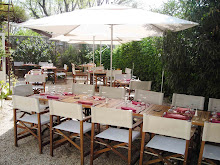
Le Petite France is a bistro located between the small villages of Paradou and Maussane, just south of Saint-Remy-de-Provence. We dined al fresco style under white market umbrella shaded tables. The menu consisted of four courses.

Tart of warm garlicky puree of salt cod tart with potatoes or cheese and garnished with fava beans, a Provence specialty.

Roasted pigeon with potatoes and stuffed tomatoes was followed by a cheese course (not pictured).


The menu called this dessert assiette gourmande. It was the best dessert of our entire trip.


Maitres Cuisiners de France signifies that the chef of Le Petite France is a member of the prestigious Master Chefs of France.


We now travel to a larger city nearby, Arles, an old Roman town. The Place de Forum is steeped in history but now is the heart of modern life in Arles and a good place to start exploring. An outdoor café is the perfect place to sit and observe life in the city. 

Grand Hotel Nord-Pinus in the Place de Forum, Arles.


The Grand Hotel Nord-Pinus is a gorgeous old hotel built around two surviving columns from a second century temple. We had dined here on a previous trip several years ago and enjoyed an elegant three course gourmet meal on their terrace, soaking up the atmosphere of this lovely city. For dessert that day we sampled a memorable Clafouti Framboise that we’d seen featured in Bon Appetit magazine’s Provence issue and drank an excellent local wine from the nearby city of Orange with our meal.


Today we decided to dine across the street at Le Café La Nuit.


Le Café La Nuit looked just like one of Vincent van Gogh’s painting and we succumbed to its feeling of walking into an old haunt of the artist’s to have lunch. Van Gogh painted over 300 canvases in the fifteen months he lived in Arles. This café is renovated to look as it did in his painting Cafe du Soir. We each ordered an appetizer and an entrée.


I think it’s fun to glance back and compare the meals. To me the portions at Le Café La Nuit were larger and more Americanized compared to Le Petite France or the dessert at the Hotel Nord-Pinus.  There’s no doubt in my mind that the next time we visit Arles, we’ll dine at the Grand Hotel Nord-Pinus and leave the table at La Café La Nuit for the tourists.

Bistrot Decouverte in Saint-Remy was our favorite local bistro.


Bistrot Decouverte quickly became our favorite local bistro in Saint-Remy and we dined there often over our two month stay. We got to know the owners, Claude and his wife Dana, and frequently stopped by mid-morning for a tiny cup of French espresso and to visit with them. Claude had been a wine buyer in London for a number of years and his bistro had an excellent wine cave. Throughout our stay Claude made many great suggestions of local wines for us to try.

Gorgeous dessert that my husband couldn’t help but sample before photographing.


One day we asked Claude and Dana if they ever served Lapin – rabbit. Not often they said, because it’s difficult to prepare. We went on to explain that we had made it at home but hadn’t been happy with our results and were anxious to try the true French Lapin. We asked them to call us if it was ever the plat du jour. About a week later I was walking along the boulevard when I heard someone call my name. Surprised that I might know someone in France, I looked around. It was Dana. We’re having Lapin this Sunday she said. Would you like to make a reservation? Needless to say I said Oui Madame, s’il vous plait. The  Lapin was delicious and was prepared a la moutarde – with mustard sauce. Claude quickly sold out of it and, much to our good fortune, featured it several more times during our visit.

Sunday entertainment on the boulevard near Bistrot Decouverte makes dining all that more special.


Patricia Wells said that she was never disappointed with Le Bistrot du Paradou as I mentioned in my last post. We felt the same way about Bistrot Decouverte. It didn’t take us long to learn it’s smart to get to know the owners. Claude, Dana and Bistrot Decouverte were some of our best memories of the trip.

Please note: Since this post was written, Bistrot Decouverte has changed hands. Owners Claude and Dana owned and operated the bistro for 7 years and sold it 2011. They've opened a fabulous new Italian and pizza restaurant across the street at La Cantina at 19 Boulevard Victor Hugo in Saint-Remy. Be sure to read my post on La Cantina here- by far the best pizza in town and in our opinion, in the world.  

Thank you for joining us on our 2007 trip to bistros of Provence. I hope you will join us again next time as we visit the boucherie –butcher shop, the boulangerie – bakery, and the patisserie - pastry shop in Saint-Remy.

This will be linked to Oh the Places I've Been at the Tablescaper.