Showing posts with label appetizers. Show all posts

Wednesday, December 17, 2014

Spicy Cranberry Goat Cheese Log


This spicy cranberry goat cheese log is a fresh twist on a cheese ball and a perfect appetizer for the holidays. The sweetness of the cranberries and cinnamon brings just the right balance to the spiciness of the ginger and the creamy tang of the goat cheese.

If you’re pressed for time and who isn’t, especially this time of the year, you’ll be pleased to know that this appetizer comes together in a matter of minutes and also it can be made a couple of days ahead and refrigerated. Be sure to bring it to room temperature before serving.


Fresh Market featured a similar spicy cranberry goat cheese log in their special holiday cheese this year and it was that log that inspired this recipe. I brought one home to taste and quickly realized that I could make my own with good success. If there is a secret to this cheese log it's the candied ginger. You might think it would be very sweet, but take a bite and all of a sudden you'll get a big burst of spiceness. To me, it's that burst of spice that sets this recipe apart from other cheese logs.

There’s plenty of room for personalization with this recipe – pistachios or pecans could be used instead of walnuts, substitute dried cherries for the dried cranberries, and if you’re not a goat cheese lover as I am, cream cheese would work, but it won’t be as tangy as if you used goat cheese and will change the recipe entirely. I’ve served this with table water crackers, which are a very neutral tasting cracker. I believe stronger flavored crackers such as Triscuits would overpower the log, but apple or pear slices make a nice companion. We chose to serve a red wine with this, such as Merlot, but a glass of bubbly would be splendid as well.


Spicy Cranberry Goat Cheese Log
My Carolina Kitchen, Sam Hoffer, serves 3 – 4
Printable Recipe

3 heaping tablespoons dried sweet cranberries
3 heaping tablespoons chopped toasted walnuts, pecans, or pistachios
3 heaping tablespoons finely chopped candied ginger
3 heaping tablespoons sliced almonds
1 teaspoon cinnamon
1 teaspoon sugar
1 – 4 ounce soft goat cheese/chèvre log, preferably made in France
White table water crackers such as Carr’s or similar thin, crunchy white crackers
Slices of apples or pears, optional

In a small food processor, grind/chop all of the ingredients except the goat cheese until well blended with no big lumps. Have a little taste and adjust accordingly. Spread on a plate and roll the goat cheese log in the mixture to cover the sides, patting it in with your hands if it doesn’t adhere properly, leaving the ends uncovered. Serve with table water crackers or similar thin crackers and/or slices of apples or pears.

The goat cheese log can be made a couple of days in advance and refrigerated, covered, until serving. You may have some of the topping left over. If so, you can sprinkle some around the cheese log.

Cook’s notes: Dental floss does an amazing job of slicing soft cheeses such as goat cheese. A mild, neutral tasting cracker is a nice companion for the goat cheese log so it doesn’t overpowering the other flavors. Can be made ahead and refrigerated, but be sure to return it to room temperature before serving.


For better viewing, click photos to enlarge.

This will be shared with Foodie Friday at Rattlebridge Farm, Miz Helen’s Country Kitchen Full Plate Thursday, and Weekend Bites at Simple Recipes.    
Have a great weekend everyone.

Tuesday, March 4, 2014

Smoked Salmon Tartare on Cucumber Rounds Featured on IVillage's 10 Easy & Elegant Dinner-Party Recipes for Non-Cooks

Smoked Salmon Tartare on Cucumber Rounds
My Carolina Kitchen’s Smoked Salmon Tartare on Cucumber Rounds was featured recently on IVillage’s

10 Easy and Elegant Dinner-Party Recipes for Non-Cooks
Even if you have no confidence in the kitchen, you can pull off these easy appetizers, entrees and desserts and impress your guests. 

Link to the IVillage article here. You may remember the smoked salmon tartare from my post here. There were two versions, one with smoked salmon, and the other was a combination of smoked salmon and cooked salmon shown below. The smoked salmon tartare is more upscale and a little fancier, where the second version using two kinds of salmon is more like its bistro country cousin.

Salmon spread on cucumber rounds
I’ve been intrigued lately by how often I see cucumbers used in place of crackers or bread in appetizer recipes. By the way, the cucumbers that I’ve used are a hothouse variety, not the big fat ones with all of the seeds that you associate with summer gardens. The hothouse or European cucumbers are thin, almost seedless, and advertised as burp less. They are available year-around and I use them quite often in salads and appetizers.

Ina Garten’s Barefoot Contessa’s cookbook Back to Basics features sliced hothouse cucumbers with spicy salami as one of her “10 no-cook things to serve with drinks.” I’ve served her cucumbers and sausage numerous times at our house for dinner parties as an appetizer accompanied with store bought cheese straws and they disappear fast, especially with the men.


Recently I was very impressed with cucumbers sliced on the diagonal topped with a very pretty lump crab salad garnished with a few sprigs of dill that I saw on Williams Sonoma’s blog Taste, here. By slicing the cucumbers on the diagonal, it produces a bigger appetizer that would be quite lovely for a first course and it makes a really an upscale presentation. Be sure to take a look at the photo here. I think you will be impressed too.

I’ve seen other very attractive and tasty toppings for cucumbers on the internet, ranging from Kalyn’s Kitchen cucumber appetizer bites with hummus, a shrimp cucumber appetizer from I’m an Organizing Junkie, and avocado tomato bites from What’s Cooking Italian Style. I can even imagine that old southern favorite, pimento cheese, atop a cucumber round would also be delicious.

Have you ever served cucumber slices as a base for a spread or salad and what do you think of the idea?

* * *
This will be linked to The Comforts of Home - Tasty Tuesday. Tasty Tuesday is a brand new linky party. I hope you'll join me and the others at Penny's grand opening of Tasty Tuesday

Thursday, December 12, 2013

Remembering Foleys and Their Fabulous Cheese Spreads


Cheese spreads are one of my favorite appetizers. These are two old favorites that have been in my repertoire all of my married life. They were inspired by the deli, located in the downtown store at Foleys’ department store in Houston. One has a sharp cheddar base with a bit of heat and the other a blue cheese flavored with port wine.


Foleys, one of the grand department stores in downtown Houston on Main that occupied the entire city block plus the parking garage across the street, was an institution, where generations of Houstonians shopped. The downtown store was like a city with its nine floors, plus a full basement that housed the budget departments. Foleys was one of the first buildings in downtown to have a tunnel that allowed people to get to the parking garage without having to wait to cross the street. You could buy everything your heart desired there. The escalators were state of the art and they whisked you up from the basement through the entire store all the way up to the ninth floor and were by far the fastest escalators I’ve ever been on in my entire life. At Foleys you could find fashion attire for the entire family, select bridal china and silver, purchase your baby’s first shoes, furnish your entire home from linens to a dining room table, or outfit your house with major appliances and televisions. During your visit you could have lunch in one of several restaurants, or browse for the latest best seller in their well stocked bookstore, while waiting for your prescription to be filled in the pharmacy.

Going to Paris? Foley's travel agency could book your flight while you shopped for luggage and got a trendy hairstyle in the beauty salon. Perhaps you are only in town for a short time with a very long shopping list and very little time – a personal shopper will be dispatched to your rescue. Men could leave their car in the auto department of the parking garage to be fitted with new tires while they shopped for all of the latest in sporting goods & golf clubs or checked out the newest advances in cameras. On the way down to get his car, perhaps stop at the Men’s Grill for lunch with the guys. Many generations of Houston children sat on Santa Claus’ lap and told him what they wanted for Christmas after making their selections in Foleys extensive toy department. And of course you could purchase their fabulous cheese spreads which I loved so much in the deli.

I began my career at Foleys in the downtown store, recruited off campus in the late sixties from the University of Arkansas where I was working on my masters, to join their executive management training program in fashion merchandising. At that time women weren’t in management positions in business, especially in the South. I envisioned a world where women had the same opportunities in the business world as men. Unfortunately there weren’t any Sheryl Sandburgs telling us how to “lean in” or role models such as Marissa Mayers, currently the CEO at Yahoo, showing young female college graduates how to climb the corporate ladder. A career in fashion merchandising was one of the only places that I found that welcomed women into the fold of the business world, and men for that matter, without prejudice based on race or sexual preferences. Foleys & Federated department stores were what I call “the major leagues” in the business and there were plenty of women role models to be found in management there. I consider my experience at Foleys as a way of finishing graduate school and the lessons I learned there were invaluable throughout my career.

Their blue logo 

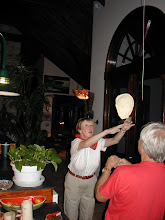
In my early career, my whole life revolved around Foleys downtown. I found my husband at Foleys, or as he tells it, he found me. As a trainee on a break, I sat about six stools down at the same lunch counter from Mohammad Ali, generally considered among the greatest heavyweights in the sports history, as he and his manager and a friend were sipping sodas, acting like normal, everyday shoppers.  The omelet king Rudy Standish, who earned that title by making omelets for JFK’s inaugural breakfast and later flipping his famous omelets for Princess Diana, demonstrated his famous pan in the fifth floor Azalea Terrace dining room.  As a young cook I was so impressed that I rushed to the house wares department and bought his pan in harvest gold (remember harvest gold?) and made my very first omelet. When the astronauts returned to Houston after their walk on the moon and were honored as local heroes with a huge parade in downtown Houston on Main Street, I stood with my friends and waved and threw confetti from the rooftop of Foleys.

When I joined Foleys it was a part of Federated Department stores. They prided themselves in customer service. In the downtown store, lunch hour for office workers from the surrounding buildings was from twelve to one o’clock and the store would be packed with shoppers. Twelve to one at Foleys was called “Holy Hour.” Every executive from the CEO on down was on the sales floor assisting customers during twelve to one o’clock and there were no exceptions or excuses for ever missing Holy Hour. The customer came first and was always guaranteed satisfaction. As the story goes, a young boy once told his mother, “I wish I had gotten the measles at Foleys. Then I could have taken them back.” After I left, Foleys changed ownership and continued to build more branches throughout Houston, then on to other cities in Texas and the southwest. Towards the end once again they became part of the Federated group. Soon all of the Federated stores, with the exception of Bloomingdales, became Macy’s stores.

I am still in shock that this past September the downtown store was imploded (link here to pictures) and a downtown Houston landmark went up in smoke. As one Houstonian said, “They blew up Foleys. What’s next, the Astrodome?” The Astrodome, once dubbed the 8th wonder of the world, was the world’s first multi-purpose domed sports stadium and had just been completed when I moved to Houston, fresh out of college. As I write, the fate of the aging Astrodome is unknown and may just become a part of history too, just like downtown Foleys.   .

Of course Foleys deli in the downtown Houston store and their fabulous cheese spreads that I adored are a fading memory and a part of their demise. Foleys had several versions of cheese spreads and I’ve tried for ages to get the original recipes with no luck, even when I worked there. Over and over again I experimented with them, tasting the originals alongside my own, and finally created these as close as I possibly could to the originals. I hope you enjoy them as much as we do. These are spreadable cheeses and you don’t want the consistency to be too thick or dense, hence the use of cottage cheese.


Foleys Cheddar Cheese Spread
My rendition from My Carolina Kitchen

8 ounces extra sharp cheddar cheese, or a combination of cheddar and Edam, cut into ½” cubes & chopped in a food processor for about 30 seconds to 1 minute (yellow cheddar is recommended for color)
8 tablespoons small curd cottage cheese, or more if necessary
4 tablespoons mild to medium Mexican picante or taco sauce (not the chunky kind)
6 tablespoons chopped jalapeno peppers, seeded and ribs removed
2 tablespoons finely chopped fresh Italian frying pepper, plus more for garnish

Pulse cheddar cheese cubes in a food processor, then add the cottage cheese and picante sauce. Process once again with all of the peppers. If the mixture is too thick, add a little more cottage cheese. Taste for seasonings. Should be mildly hot but not overly hot. Can add a dash or two of Shirachi if you wish, which was unknown to me at the time or leave some of the seeds in the jalapenos for a spicier spread. Will keep several days, covered, in the refrigerator. Best served with thin, crispy Finn Crisp, 100% rye crackers, which I always bought in the deli to go with their cheese spread.


Foleys Blue Cheese Port Wine Spread
My rendition from My Carolina Kitchen

8 oz sharp Cheddar cheese, cut into ½” chunks
2 oz cream cheese, cut into ½” chunks, we used low fat
2 oz blue cheese, crumbled into chunks
4 tablespoons small curd cottage cheese, we used low-fat
1 teaspoon garlic salt
1 teaspoon Worcestershire sauce
1 tablespoon port wine
Chopped green onion tops, 4 – 6 tablespoons

Pulse cheddar cubes in a food processor for about 30 seconds until it begins to crumble. Add cream cheese, blue cheese, cottage cheese, garlic salt, Worcestershire sauce, and port wine. Continue to process until the mixture resembles a spread. Add the green onion tops and process until smooth. Will keep several days, covered, in the refrigerator. Serve with crackers or crudités.


I want to add a PS to this. The Foleys I describe is the downtown store in Houston. Many of the things I remember about the downtown store were sadly not in the branches.

If you would like to read more about the history of Foleys, Lasker Meyer, the son of one of Foleys original owners who became President and later CEO, has written a very comprehensive history in his book, Foley’s, a part of the Images of America series. The Department Store Museum has some great photos of various department stores, link here. You also might enjoy The World of Department Stores by Jan Whitaker, link here.

Do you have a favorite department store that brings back memories for you?


This will be shared with Foodie Friday at Rattlebridge Farm, Miz Helen’s Country Kitchen Full Plate Thursday, and Foodie Friday at Simple Recipes.
Have a great weekend everyone.


Friday, November 29, 2013

Leftover Cranberry Sauce? Make a Cranberry Blue Cheese Crostini


Do you have leftover cranberry sauce and not sure what to do with it? Then try this easy cranberry blue cheese crostini. If you’re been reading My Carolina Kitchen for a while you’ve probably seen it, but it’s so simple and delicious, that I’m showing it again for those who might have missed it.


All you need to do is toast some slices of a crusty French baguette, top with a few sprigs of fresh arugula or watercress, then a dab of cranberry sauce, a slice of good blue cheese, a tiny drizzle more of cranberry sauce and a crank of freshly ground black pepper and you’re good to go. For a festive touch during the holiday season, garnish with a sprig of holly from your garden or the florist.


I’ve used my “French” cranberry sauce, link here, but any good cranberry sauce will do.

This will be shared with Foodie Friday at Rattlebridge Farm, Miz Helen’s Country Kitchen Full Plate Thursday, Foodie Friday at Simple Recipes, and Seasonal Sunday at the Tablescaper.

Have a great weekend everyone.


Thursday, October 10, 2013

Marcella Hazan’s Spaghetti Frittata


The food world lost one of its greats on September 29, 2013, when Marcella Hazan passed away at her home in Longboat Key, Florida. It was Marcella Hazan who first introduced Americans to authentic Italian cuisine and forever changed the way we as Americans cook and perceive Italian food today.

An Italian newlywed, Marcella arrived in America in New York in 1955, speaking no English. When she encountered American Italian restaurants serving what tasted to her like overly spiced ketchup on spaghetti, culture shock settled in. With no cooking skills of her own, she was determined, as all of us are as newlyweds, to cook a proper meal for her husband. She learned English from watching television and, quite by accident, began to teach cooking classes after a course in Chinese food. The rest, as they say, is history. For more about her fascinating life and how she influenced Italian cuisine in America, I highly recommend this article in the New York Times, link here. Included in the article is a video of Mark Bittman’s visit with Marcella in her home where she relates her story of how she first started to write cookbooks. In the same article, Mario Batali is quoted as saying, “I didn’t pay attention to Julia Child like everyone else said they did. I paid attention to Marcella Hazan.” Lidia Bastianich calls Marcella “the first mother of Italian cooking in America.” High praise coming from some of our finest Italian cooks don’t you think.

Marcella’s recipes represent her love for simplicity and precision.  For that reason, I chose to remember her with this recipe for a simple spaghetti frittata from her cookbook Essentials of Classic Italian Cooking. In the forward to this recipe, Marcella advises, “If you are making a pasta frittata for the first time, you will find this a good with to start with, to get the feeling, look and taste of the finished dish.”

Frittatas are very versatile and can be served sliced into wedges like a pie, or cut into pieces for an appetizer. Either way, they are delicious served warm or at room temperature, making them ideal for a buffet or party.


In this recipe, Marcella starts with freshly cooked spaghetti, slightly undercooked because it will undergo further cooking. We’ve been making spaghetti frittatas for years and often use left-over cooked spaghetti as the base of the our frittatas, but they require a bit more liquid than this recipe. If this is your first time to use pasta in a frittata, I suggest you follow her recipe to a T. Although the recipe calls for only Parmesan cheese and parsley as flavoring, I couldn’t help but improvise by adding a big handful of colorful sautéed sweet peppers for appearance. Once you get the hang of pasta frittatas, you’ll think of all sorts of ways to incorporate different ingredients from your favorite pasta dishes.


Marcella Hazan’s Spaghetti Frittata 
Adapted slightly from Essentials of Classic Italian Cooking by Marella Hazan – serves 4

1/2 pound spaghetti, we like to use thin spaghetti
Kosher salt
3 tablespoons butter
1/3 cup freshly grated Parmesan cheese
3 tablespoons chopped fresh Italian parsley
3 large eggs, beaten to blend and placed in a bowl large enough to hold the cooked spaghetti
Freshly ground black pepper to taste

Added for color and flavor if desired:
½ cup finely chopped, sautéed red, orange, and yellow sweet bell peppers

Drop the spaghetti into 3 to 4 quarts of boiling, salted water and cook until firm to the bite. It should be a bit more al dente – more underdone – than you usually cook it because it will undergo further cooking. Drain and toss immediately into a large bowl.  Add 2 tablespoons of butter, grated cheese, and chopped parsley, sautéed peppers if desired, and toss well. Set the mixture aside to briefly cool to avoid cooking the eggs in the next step. In the meantime, preheat the broiler.

When the spaghetti mixture has cooled for a few minutes, add it to the bowl of beaten eggs and mix thoroughly, distributing the eggs evenly throughout the pasta.

Heat 1 tablespoon of butter over medium heat in a nonstick skillet with a broiler proof handle. Before the butter starts to color, add the spaghetti/egg frittata mixture to the skillet. Cook the frittata on top of the stove for 3 to 4 minutes without disturbing the pan. Then tilt the pan slightly, bringing its edge closer to the flame of the burner. Keep the pan in this position for about 1 minute, then rotate it at a shade less than a full quarter turn, always keeping it tilted so that its edge is close to the flame. Repeat until you have come around full circle. Take a look at the underside of the frittata, lifting the edge gently with a spatula, to make sure it has formed a lightly golden crust all around. If it has not, cook a little longer where needed.

Run the pan under the broiler until the top has formed a lightly colored crust. Remove and loosen with a spatula. Slide onto a cutting board and cut into serving wedges as you would a pie. Alternately, cut into pieces or squares and serve as an appetizer. Good either warm or at room temperature.


This will be shared with Foodie Friday at Rattlebridge Farms, Miz Helen’s Country Kitchen Full Plate Thursday, Foodie Friday at Simple Recipes, Foodtastic Friday at Not Your Ordinary Recipes, and Seasonal Sunday at the Tablescaper.

Have a great weekend everyone.


Thursday, September 12, 2013

Smoked Salmon on Cucumbers – featuring two versions of this upscale appetizer


Smoked salmon on cucumbers is a snazzy appetizer to serve for dinner guests or at a party. It is very easy to prepare and goes together quickly. Plus it can be made a few hours in advance and held in the refrigerator until your guests arrive. Or right before dinner you can put this appetizer together with your friends as we did recently when one of my oldest and dearest friends from childhood was here with his wife.

I’m presenting two versions of smoked salmon on cucumbers today. The first one is smoked salmon tartare. Smoked salmon tartare is a spin on the classic dish steak tartare. Steak tartare is a bistro dish in France consisting of very finely chopped raw sirloin, mixed with capers, chopped onion and seasonings. We like to serve it on a French baguette or toast. Steak tartare is one of my husband Meakin’s specialties. You may remember his recipe from a post awhile back, seen here.

The second is a variation on the salmon tartare, but uses two kinds of salmon. There’s more about the salmon spread one further down in the post. Both versions are very good and well received at parties. The smoked salmon tartare is more upscale and a little fancier, where the second version using two kinds of salmon is more like its bistro country cousin.


Smoked salmon tartare on cucumber rounds
From Everyone Can Cook for Celebrations by Eric Akis – makes 20 rounds

1 tablespoon extra-virgin olive oil, best quality
2 teaspoons freshly squeezed lemon juice
1 teaspoon Dijon mustard
4 ounces smoked salmon, finely chopped, we used sockeye smoked wild salmon
3 tablespoons finely chopped red onion
1 tablespoon small capers, drained
2 teaspoon finely chopped fresh dill, plus more for garnish
Freshly ground black pepper to taste
20 slices of an English (also called European) cucumber, cut in ½” thick slices

In a large bowl, whisk together the olive oil, lemon juice and Dijon mustard. Add salmon, onion, capers, and dill and stir to combine. Grind some black pepper over the mixture and taste for seasonings and adjust as necessary.

Using a small melon baller or spoon, scoop out some of the center portion of each cucumber slice, making sure not to go all the way through the cucumber. Mound 2 teaspoons of the smoked salmon tartare in the center of the cucumber slice (I used the melon baller for this). Garnish with tiny sprigs of fresh dill if desired. Serve right away or store on a covered tray in the refrigerator for several hours in advance of serving.


Smoked salmon spread on cucumbers


When I realized that we make a similar salmon spread that also uses capers and red onion, using left-over salmon combined with a cream cheese/sour cream mixture, I came up with a new version of our old salmon spread by adding smoked salmon from the tartare recipe for a burst of extra flavor.

Left-over cooked salmon stands in for part of the smoked salmon, making it a less expensive appetizer but still retaining the flavors of the fancier version. Our tried and true favorite method of cooking salmon is to broil it, recipe here. We always cook a little extra for occasions such as this. Cream cheese and sour cream hold the mixture together in place of the olive oil and the other ingredients remain the same.


Smoked salmon spread on cucumber rounds
From My Carolina Kitchen

I don’t really follow a formal recipe. I operate by eye-balling the mixture based on how much left-over salmon I have and taste as I go.  Here’s what I do. 

Using a two to one ratio, place chopped left-over cooked salmon and chopped smoked wild sockeye salmon in a large bowl. Toss in a little finely chopped red onion. Again using a two to one ratio, add a combination of whipped cream cheese and sour cream (low fat works fine for both of these) and stir to combine with the salmon and onions. Too much cream cheese makes the mixture stiff; too much sour cream makes it loose. Squeeze a little fresh lemon juice over the salmon; add some small capers, a little chopped fresh dill and several grinds of black pepper. Taste for seasonings and texture and adjust accordingly.

To serve, slice a portion of an English cucumber into ½” thick rounds. Use a small melon baller or spoon & scoop out some of the center portion of each cucumber slice, taking care not to go all the way through the cucumber. Mound 2 teaspoons of the salmon spread in the center of the cucumber slice (I used the melon baller for this). Garnish with tiny sprigs of fresh dill if desired. Serve right away or store on a covered tray in the refrigerator for several hours in advance of serving. Another one of our favorite ways to serve this salmon spread is on traditional table water crackers, such as Carr’s.  As you can see, it is different from the salmon tartare.


I have news -

My new Facebook page for My Carolina Kitchen is now up and running. Thank you Becky McNeer of Not Your Ordinary Recipes for your help. If you haven’t already “liked” my new page, I would be very pleased if you would click over and like My Carolina Kitchen. Click here to like or click the link to Facebook in the right column on the blog.

This will be shared with Foodie Friday at Rattlebridge Farms, Miz Helen’s Country Kitchen Full Plate Thursday, Foodie Friday at Simple Recipes, Foodtastic Friday at Not Your Ordinary Recipes, Seasonal Sunday at the Tablescaper, & Food on Friday at Carol's Chatter.

Have a great weekend everyone.


Thursday, December 13, 2012

Chicken Marbella recreated into cocktail food for a party buffet


Through the years I’ve made Chicken Marbella many times for dinner parties and it’s always a crowd pleaser. With its irresistible and alluring flavors, the chicken with pieces of dark fruit, green olives and capers scattered over, napped with a slightly sweet and savory sauce, the inevitable question poised at the dinner table is always, “What IS this? It’s fantastic.”

Well, start with lots of garlic, vinegar, oregano, brown sugar, wine, capers and briny green olives, dried prunes, or plums as they are now called, and marinate with chicken overnight. Bake in the oven and it couldn’t be an easier dish to prepare. It practically makes itself. It’s perfect served hot, at room temperature, or cold. Could you ask for anything more?

Chicken Marbella was one of the most popular recipes ever to come from the wildly successful Silver Palate Cookbook, which recently published its 25 anniversary edition. The original recipe called for cut up chicken, but in today’s world, if I were making it for a dinner party, I would probably use boneless, skinless chicken thighs or cut in half bone-in chicken breasts. If you're serving it for a dinner party, it is excellent over couscous or rice with baby English peas. A nice accompaniment is an French fresh orange salad, link to recipe here.


But herein is our dilemma. We needed a dish to take to our condo’s Christmas party at the pool the other night and it needed to be a dish that people would be able to serve themselves in small portions, hold up well on a buffet, and allow to be eaten with one of those pitiful plastic forks they invariably give you as these kinds of events. Thus the reincarnation of Chicken Marbella that I present today. Sliced chicken breasts seemed like the perfect solution and it was. Everyone raved about it, as what always happens when you serve Chicken Marbella. Even 25 years since The Silver Palate first published this recipe, there are still those among us who have never, ever tasted Chicken Marbella and some of them were at this party. There’s no shame in that. It's fun to introduce new people to Chicken Marbella. But their first reaction is still the same as it’s always been – “What IS this? It’s fantastic.”

Make people happy - serve this at your next buffet. Nothing could be easier or more of a “people pleaser” than the intriguing and exotic Chicken Marbella. I don’t know anyone who doesn’t love this dish and it always distinguishes itself among the other buffet offerings “the very best of the best.”


Chicken Marbella recreated into cocktail food for a party buffet
Adapted From The Silver Palate Cookbook

6 large plump boneless skinless chicken breasts halves
½ head of garlic, peeled & finely pureed
¼ cup dried oregano
Kosher salt & freshly ground pepper to taste
½ cup red wine vinegar
½ cup extra virgin olive oil
1 cup pitted dried prunes or dried plums as they are now called, bite size preferred, or large ones cut in bite size pieces
½ cup pitted Spanish green olives
½ cup capers with a bit of juice
6 bay leaves
1 cup brown sugar
1 cup dry white wine
¼ cup Italian parsley or fresh coriander (cilantro), finely chopped

In a large bowl combine chicken, garlic, oregano, pepper and coarse salt to taste, vinegar, olive oil, prunes, olives, capers & juice and bay leaves. Cover and let marinate, refrigerated, overnight.

Preheat oven to 350 degrees F.

Arrange chicken in a single layer in one or two large, shallow baking pans and spoon marinade over it evenly. Sprinkle chicken with brown sugar and pour white wine around the chicken. Bake for 50 minutes to 1 hour, basting frequently with pan juices. Chicken is done when it registers 160 degrees F on an oven thermometer.

Remove the chicken breasts and slice into serving pieces. Transfer sliced chicken, and with a slotted spoon, transfer prunes, olives and capers over chicken to a serving platter. Discard the bay leaves. Moisten the chicken with a few spoonfuls of pan juices and sprinkle generously with parsley or cilantro. Pass remaining pan juices in a sauce boat.

Good served hot, at room temperature, or cold. To serve cold, cool to room temperature in cooking juices before transferring to a serving platter. If chicken has been covered and refrigerated, allow it to return to room temperature before serving. Spoon some of the reserved juice over chicken.

Notes: Don’t skip the overnight marinating; it’s essential for flavor. If in a hurry, marinate at least 4 hours. To turn back into the original recipe, use two whole chickens cut into serving pieces, or quartered, or any combination of chicken parts, including halved breasts or all thighs. Either version is good hot, cold or room temperature.


This will be shared with Foodie Friday at Rattlebridge Farms, Miz Helen’s Country Kitchen Full Plate Thursday, Foodie Friday at Simple Recipes, Foodtastic Friday at Not Your Ordinary Recipes, and On the Menu Monday at Stone Gable.

Have a great weekend everyone.

Tuesday, November 20, 2012

A Trio of Different Cranberry Sauces & Ideas for Leftover Cranberry Sauce


Cranberry sauce is always on our Thanksgiving table, sitting right next to the turkey. Even if we aren’t hosting Thanksgiving, which we aren’t this year, I always bring the cranberry sauce.  

I’ve been making my own cranberry sauce for years, but I decided to give a couple of new ones a try this season. Our traditional cranberry sauce is flavored with red wine with a citrus undertone. It will probably always be my favorite.

But today I have two new varieties of cranberry sauce to offer. Both are decidely less sweet than the traditional. The first is a mixture of fresh cranberries and dried tart cherries, flavored with crème de cassis, a popular French black current-flavored liqueur. If you’ve ever drunk a Kir or a Kir Royale, then you’re familiar with cassis. A Kir is a French cocktail made with a dash of crème de cassis and topped with dry white wine. A Kir Royale is made the same way but topped with champagne. In France Kirs are served as an aperitif before dinner. 

The cherry flavor really comes through in this cranberry sauce and offers a new and exciting taste to the traditional. It was Meakin’s favorite of the two.

The second new cranberry sauce we tried is a citrusy one flavored with dried figs and crunchy nuts. It, to me, is much more of a relish and I really enjoyed the crunch of the nuts. My mother used to make a cranberry jelly with pecans and the nuts in this one brought back fond memories for me of my childhood. I can still see the pecan tree in the back yard.


Cranberry Sauce with Cassis and Dried Cherries
Cooking Light – serves 12

1 tablespoon canola oil
½ cup finely chopped shallots
2/3 cup dried tart cherries
½ cup crème de cassis (black currant-flavored liqueur) or orange liqueur
¾ cup sugar
1 (12 ounce) package fresh cranberries
1 ½ teaspoons grated fresh lemon rind

Heat a medium saucepan over medium heat. Add oil, swirl to coat the pan. Add shallots and sauté for 4 minutes or until tender, stirring occasionally and taking care not to let brown or burn. Add cherries, crème de cassis, sugar, and cranberries and bring to a boil. Reduce heat and simmer for 8 minutes or until cranberries began to pop, stirring occasionally. Remove from the heat and stir in the lemon rind. Cool to room temperature.


Cranberry Fig Relish
Cooking Light – serves 12

1 cup fresh orange juice (about 4 oranges)
¾ cup chopped dried figs
½ cup dry red wine
½ cup granulated sugar
¼ cup packed brown sugar
1 (12 ounce) package fresh cranberries
1/3 cup chopped roasted pecans or walnuts

Combine the orange juice, figs, and red wine in a medium saucepan. Bring to a boil, cover, reduce heat, and simmer 10 minutes. Add both sugars and the cranberries. Cook over medium heat for 10 minutes or until mixture is slightly thick and berries pop, stirring occasionally. Cool slightly. Stir in pecans. Cover and chill. If you make this a few days ahead, leave out the nuts until just before serving so they remain crunchy. 


My Carolina Kitchen’s Homemade Cranberry Sauce
A citrus twist on a classic – serves 12

1 (12 ounce) package of fresh or frozen cranberries
2 cinnamon sticks
1 cup dry red wine, such as a Merlot or Syrah
¾ cup to 1 ½ cups sugar, or to taste
2 tangerines or navel oranges

Put the cranberries (no need to thaw if they’re frozen) in a sauce pan with the one of the cinnamon sticks, red wine, and sugar. Zest the tangerines and set aside half of the zest for a garnish. Add the remaining zest and the juice of both tangerines to the cranberry mixture. 

Stir the cranberry mixture and bring to a boil.  Partially cover the saucepan and simmer about 15 minutes, until the cranberries have burst. Remove from the heat, let cool, and discard the cinnamon stick. The sauce will firm up as it cools. It can be refrigerated, covered, for up to five days. Serve at room temperature.

At the last minute, using a microplane rasp style grater, grate a little cinnamon “dust” over the cranberry sauce and garnish with the remaining citrus zest. 

Ideas for left-over cranberry sauce


By the way, if you have left over cranberry sauce, it’s great on a turkey sandwich with horseradish and cream cheese. Or turn it into a sophisticated little holiday appetizer that I posted a year or so ago. Toast slices of a crusty French baguette, top with fresh arugula or watercress, then a dab of cranberry sauce and finish with a slice of good blue cheese or gorgonzola and a crank of freshly ground black pepper. A little more cranberry sauce on the top doesn’t hurt either. Voila, a cranberry & blue cheese crostini. 

* * *

This will be shared with Foodie Friday at Rattlebridge Farms, Miz Helen’s Country Kitchen Full Plate Thursday, Foodie Friday at Simple Recipes, Foodtastic Friday at Not Your Ordinary Recipes, Seasonal Sunday at the Tablescaper, and On the Menu Monday at Stone Gable. 

Happy Thanksgiving to those in the U.S.


Thursday, August 23, 2012

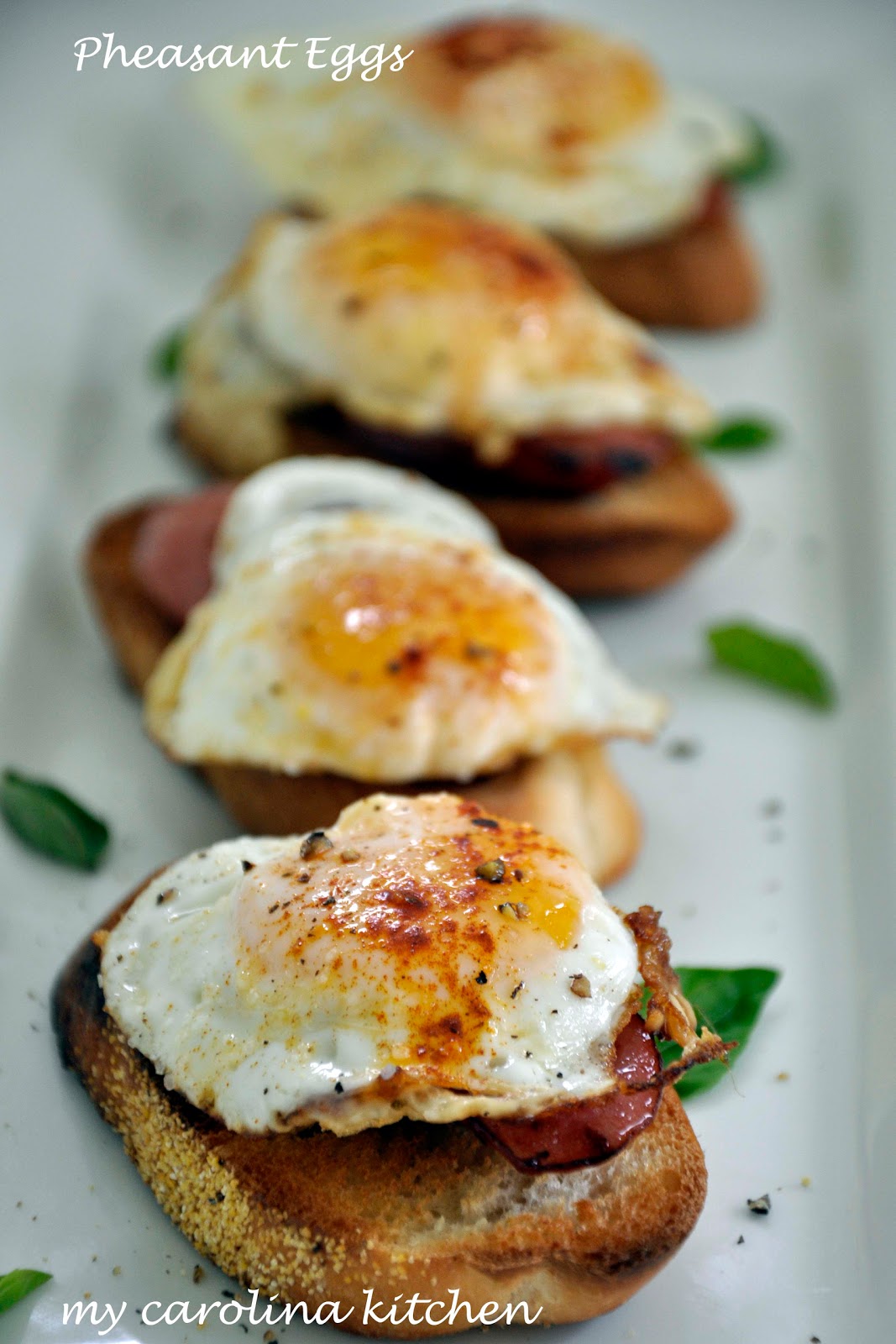
Pheasant Eggs on Sausage Toast – a Very Special Treat


Pheasant eggs you say. Where on earth did you find pheasant eggs? Actually we started out looking for banty eggs, which are tiny eggs laid from a Bantam chicken. Here in the mountains we buy organic eggs or in some areas what are called “yard eggs” from a local vendor. We were visiting with her one day about eggs and she mentioned that occasionally she gets tiny banty eggs and asked if we would like some. Of course we replied, save some for us the next time you have them. I was intrigued with using the tiny eggs in a recipe and we talked about ideas on the way home. As luck would have it, every time we asked about the banty eggs she said the chickens were molting right now and she didn’t have any. (If the word molting and the laying habits of hens when they lose their feathers are as new to you as they are to me, here’s more information.)

After that, we just put the idea of small eggs on the back burner until we were at our local farmer’s market a couple of weeks ago. My husband Meakin was visiting with a vendor who sells produce, eggs, and flowers and on a lark he asked if he happed to have any banty eggs. Much to our surprise he did, but apologetically said that he had only one. But, he added, he also had four pheasant eggs. Bingo, we finally found some tiny eggs.

As you can see by this picture, banty eggs (or bantam eggs as they are also called) are smaller than a large hen egg and pheasant eggs are even smaller than the banty.


The pheasant eggs are khaki-colored and quite pretty. Compared to a hen egg, pheasant eggs and banty eggs have a higher yolk-to-white ratio, thus producing a richer flavor.


If you would like to see what a pheasant looks like, here’s a link along with some tips on cooking their eggs.

This recipe is what I call a “small plate” meal. It also makes a lovely appetizer to pass on a tray at a party. If you can’t find pheasant or banty (bantam) eggs, quail eggs will work very well also.


If you do use tiny eggs, use them in a way that shows them off and puts them on center stage. They make a great conversation piece at get-togethers. But please promise me - no scrambled eggs. They are much too special to use as ordinary eggs.

I hope you enjoy this unusual and attractive treat. If you have used any kind of tiny eggs in recipes, please share your experiences with us.

Join me next time as we visit our Saturday Farmer’s Market that’s typical of a North Carolina mountain town to see what’s offered by local farmers and craftsmen of our region.


Pheasant Eggs on Sausage Toast
Adapted from The Tapas Cookbook – serves 6 as part of a tapas meal

12 slices French bread, cut on the diagonal, about ¼” thick, toasted
24 slices ready-to-eat smoked sausage or Spanish chorizo, cut into thin pieces on the diagonal to fit the toasts, and browned on both sides in a skillet
Olive oil
12 pheasant eggs (or banty or quail eggs)
Smoked sweet Spanish paprika, also called Pimention de la Vera (or substitute mild Hungarian paprika)
Crunchy sea salt
Freshly ground black pepper

Heat a thin layer of oil in a large skillet over medium heat. Break the eggs into the skillet and cook, spooning the fat over the yolks, until the whites are set and the yolks are cooked to your liking sunny side up. Remove the cooked eggs from the skillet and drain on paper towels. Top each piece of toast with browned pieces of sausage. Immediately transfer the eggs to the sausage-topped toasts and dust with paprika. Sprinkle with crunchy salt and lots of freshly ground pepper. Serve at once.


This recipe is being linked to Foodie Friday at Rattlebridge Farms, Miz Helen’s Country Kitchen Full Plate Thursday, Foodie Friday at Simple Recipes, Foodtastic Friday at Not Your Ordinary Recipes, Seasonal Sunday at The Tablescaper, Southern Sundays at Slice of Southern, and On the Menu Monday at Stone Gable.

Have a great weekend everyone. And keep your eyes out for tiny eggs.


Thursday, August 16, 2012

Heirloom Tomato Tart - two different versions


I just can’t seem to get my fill of the wonderful heirloom tomatoes this summer. Bear with me for one more tomato post. I’m beginning to believe tomatoes may be my all time favorite food, even surpassing my love of wild-caught shrimp.

Since my birthday is this month, instead of a cake I’m celebrating with a tomato tart or pie if you will. I’ve prepared it two different ways. One was baked 9” springform pan and looks more like a deep dish pie than a tart.


In the other one, I’ve used a tart pan and, as you can see, resembles a quiche.  Either way they were delicious.


Any garden fresh red summer tomato is perfect, but if you can find heirloom tomatoes in a couple of different colors, so much the better for appearance sake, as well as the depth of flavor the heirlooms bring. The kalamata olives bring a surprise flavor and the shallots give a little crunch to this.

When I think of savory pies or tarts, I usually associate them with lots of calories and fat primarily coming from heavy cream and lots of cheese. I even have an old recipe that uses mayonnaise. This one from Cooking Light comes in under 300 calories per slice and serves 8. Add a salad and you’ve got a light, delicious summer meat-less meal or serve a slice as an appetizer with drinks.


Heirloom Tomato Tart / Deep Dish Pie
Adapted slightly from Cooking Light – serves 8
Printable Recipe

½ of a 14.1 ounce package refrigerated pie dough
3 heirloom tomatoes, preferably different colors
Kosher salt and freshly ground black pepper
Cooking spray
All purpose flour for rolling the dough
2 ½ ounces (2/3 cup) fontina cheese, grated
½ cup pitted and chopped kalamata olives
1/3 cup peeled and sliced shallots
3 tablespoons all purpose flour
1 tablespoon cornmeal
1 tablespoons fresh thyme, chopped
1 ½ cups 2% reduced-fat milk
1 ½ tablespoons grated Parmesan cheese
3 large eggs
Fresh basil leaves for garnish

Bring refrigerated pie dough to room temperature. In the meantime, cut tomatoes into ¼ to ½” thick slices and gently push out the seeds with your fingers. Sprinkle the tomatoes with salt and freshly ground black pepper and place on thick paper towels to drain. Let them drain for about 15 minutes while you preheat the oven to 350 degrees F.

For a tart, coat 9” deep-dish tart pan with cooking spray. For a deep dish pie, coat a 9” springform pan with cooking spray. Sprinkle a cutting board or your counter with a little all purpose flour and roll the dough into a 12” circle. Fold the dough in half, then into a quarter for ease of carrying to the prepared pan or roll it around your rolling pin. Carefully press the dough into the pan and crimp the edges. Cut off excess dough in making in a tart pan. Sprinkle the dough with a base of fontina cheese, olives, and shallots, then arrange half of the tomato slices over the base mixture. Combine the flour, cornmeal, and chopped fresh thyme and sprinkle over the first layer of tomatoes. Top with the remaining tomato slices and sprinkle with a little more salt and freshly ground black pepper.

In a bowl, whisk together the milk, grated Parmesan cheese, and eggs, then pour the mixture over the tomatoes. Place the pan on a large sheet pan and bake in the oven for 40 – 50 minutes until set. (The pie in the springform pan will take longer to cook than the one in the tart pan.) Test for doneness by jiggling the pan. It will be done when the filling no longer wiggles. When done, remove from the oven and let stand 10 minutes before serving. Top with small basil leaves. Can be served warm or at room temperature.


This is being linked to Foodie Friday at Rattlebridge Farms, Miz Helen’s Country Kitchen Full Plate Thursday, Foodie Friday at Simple Recipes, Foodtastic Friday at Not Your Ordinary Recipes, Seasonal Sunday at The Tablescaper, Healthy Mommy, Healthy BabySouthern Sundays at Slice of Southern, On the Menu Monday at Stone Gable, and Food on Friday at Carole's Chatter.

One year ago - Grilled Thai BBQ Chicken


Two years ago - A trip to Highlands, NC


Thursday, July 19, 2012

A Guacamole Trio + a Tip to Help the Avocado Stay Green


Guacamole is a real crowd-pleaser and one of the easiest appetizers to make. Here in the US you’ll see two varieties of avocados in the store. Most people, including ourselves, prefer the brown, pebbly skin Hass avocados from California because they have much more depth of flavor than the big smooth ones from Florida with the green rind. But if you happen to live where you have an avocado tree and you grow the big Florida green ones, by all means use them, but you’ll need to add more seasonings to your guacamole.

To tell if an avocado is ripe, they should give slightly to the touch. However, in certain parts of the world, and France is a good example, it is a definite no-no to touch fruits and vegetables. Once we were shopping in a tiny épicerie in Provence and I wanted an avocado. I knew that they didn’t want me to touch their fruit, much less squeeze it.  Not knowing the proper French for “is this ripe?” I approached the store owner with a quizzical look on my face, arched by eyebrows, and handed the avocado to him. He took his finger, popped off the little black nub on the stem end of the avocado, handed it back to me, smiled, and said, “Oui Madame.”  So there you have it - another way to tell if an avocado is ripe.


About now I know you’re saying to yourself, “she said she had a tip on how to keep the avocado green” and I do. The tip comes from Ina Garten, the Barefoot Contessa, and I know it works because I’ve tried it. Ina says to cover the guacamole with plastic wrap and press the plastic directly on top of the avocado mixture to keep it from coming in contact with air. It is the air that makes it turn brown. She believes it is a myth that an avocado pit will keep the guacamole green and says lemon juice does a better job than the pit.  I will add my two cents here – the plastic wrap placed directly onto the guacamole works great, but only for so long. Guacamole (or any other avocado dish for that matter) should not be made too far in advance or it will turn brown no matter what tip you use.

Guacamole is one of my husband Meakin's specialties and today he has made a trio of variations. Meakin likes his guacamole to have lots of taste, so he adds a bit of cumin for smokiness. Also, two essentials for really great guacamole are fresh garlic and plenty of salt. Both bring a great deal of flavor to the dish, but we believe the one ingredient that separates a "great" guacamole dip for a "so-so" guacamole is the garlic. So, be sure to use garlic. If you like it spicier, add some finely chopped jalapeno for a kick or go heavy on the Tabasco sauce.


Meakin’s Basic Guacamole Dip 
Adapted from The Barefoot Contessa Cookbook by Ina Garten

4 ripe Hass avocados
Juice of one lemon or two limes
1 teaspoon Kosher salt
1 teaspoon freshly ground black pepper
Tabasco sauce to taste (traditional red or green jalapeno)
Worcestershire sauce to taste
½ teaspoon ground cumin
½ cup red onion, peeled and finely diced
1 large clove of garlic, peeled and finely minced
1 medium ripe tomato, seeded and cut in small dice, drained well if runny
Chips for dipping

Cut the avocados in half with a sharp knife and remove and discard the pit. Scoop the avocado out of the shells and cut in chunky dice with a sharp knife, then mash a little with a potato masher, taking care to retain some chunkiness. Immediately add the lemon or lime juice and the salt and pepper and stir to incorporate.  Add the remaining ingredients, taste for seasonings, and adjust as necessary. Serve at room temperature with chips for dipping. If not serving immediately, follow tips for storage above. Yield: 3 cups


Guacamole with Bacon

Use cooked and chopped bacon as a garnish for the basic guacamole. Bacon makes everything better, so use plenty. Meakin likes Nueske’s apple wood smoked bacon or Benton’s hickory smoked bacon.


Guacamole with Roasted Corn

Roast three or four ears of cleaned and de-silked corn on a hot charcoal or gas grill for a few minutes until nicely charred and tender. Remove kernels with a sharp knife and use as a garnish for the basic guacamole.


Have a great weekend everyone and be sure to stop along the way and enjoy the pretty flowers that summertime has to offer.