Tuesday, March 22, 2011

Bistros of Provence and a Giveaway


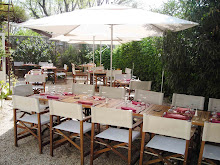
I've been feeling very French lately. Perhaps it's because I've just discovered the lovely blog Paris and Beyond and it's brought back wonderful memories for me of our trip to Provence. This lovely watercolor is from the cover of a menu of a French bistro in Maussane-les Alphiles in Provence.  Maussane is a charming village in the south of France near Saint-Remy-De-Provence with a lovely square where several bistros serve meals al fresco around the village’s fountain. As you can see, each bistro is distinguished by a difference set of tables and chairs.


Just a few kilometers down the road from Maussane is the tiny village of Paradou. Paradou is the home of Patricia Well’s favorite bistro – Le Bistrot de Paradou. Perhaps you may remember our lunch when we were there.


Because of Patricia Well’s stamp of approval and the fact that the food is outstanding, Le Bistrot du Paradou is a very busy restaurant. The owner, Jean-Louis Pons, carefully protects his bistro’s reputation by never allowing more people in than he can comfortably seat, so reservations are highly recommended. How I wish more restaurants in the US would follow Jean-Louis’ lead and not jam so many people in as they seem to do too often here at home.

On another day we enjoyed déjeuner under the umbrellas at La Petite France, also in Paradou.


Outside Le Petite France was proudly displayed Maîtres Cuisiners de France, meaning their chef was a member of the prestigious Master Chefs of France.


Seeing that sign about the chef and remembering these bistros and the fabulous meals we enjoyed there made me think that sometimes I wish I had gone to culinary school. Do you ever wish you had gone to culinary school? I’m retired now, so it’s far too late for me to pursue a culinary career, but I do enjoy reading about those who have - which brings me to the giveaway.

I’m giving away to one of you a copy of Under the Table, Saucy Tales from Culinary School by Katherine Darling. The book is a memoir of Katherine’s adventures in the student kitchens of the legendary French Culinary Institute in New York City, flavored with celebrity chefs, eccentric characters, and mouthwatering recipes. To quote part of a review from the Wall Street Journal, “Ever since Anthony Bourdain's best-selling "Kitchen Confidential," celebrity chefs and wannabees have flooded the market with boastfully naughty -- and often downright raunchy -- cook-and-tell confessions. No doubt that explains the publisher's title for "Under the Table: Saucy Tales From Culinary School." But it turns out that author Katherine Darling is a happy exception to the trend.”


It’s super easy to win - all you have to do is leave a comment telling me if you have ever dreamed of going to culinary school. If you are a follower, please leave an additional comment saying so and you’ll get two chances to win.

I’ll be taking a brief intermission to move into our condo and will return next week, when I’ll announce the winner of the book giveaway.

À bientôt mon amis – see you soon my friends. In the meantime, this is a photo of the most outstanding dessert of our trip to Provence, created by the Master Chef presiding over Le Petite France in Paradou.


Tuesday, March 15, 2011

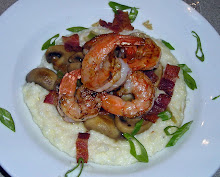
Shrimp and Scallop Salad with Mango Salsa


I find that when people visit from other areas of the country and are invited to dinner, they expect certain foods to be served. For instance, if I visit my sister in Texas, I hope she’ll prepare some of my Tex-Mex favorites, since good Mexican food is hard to find where we live in the mountains. If we’re going to Maine, I want lobster and lots of it. If we drive over to eastern North Carolina to see friends, I always have my fingers crossed they’ll roast a pig they are so famous for that’s basted with vinegary eastern Carolina BBQ sauce. Last year when we visited our old home in Abaco, I couldn’t get my fill of spicy Bahamian fresh conch salad with fiery bird or goat peppers and seasoned ever so lightly with native sour oranges.

If you live in Florida as we do in the winter, guests expect seafood. I like to have a recipe up my sleeve that’s easy, so when people call and say, “We’re just driving by. Can we stop and say hello?” I can eagerly answer, “Yes and please stay for dinner” and mean it. If you live in a tourist area, it’s smart to be prepared, because people are bound to drop by unexpectedly sooner or later.

By easy, I mean two different kinds of easy. The first easy means easy to put together. I want to spend time with my guests, not be stuck in the kitchen. The second easy is versatility. I want a recipe where I can easily substitute ingredients and know that the recipe will still work.

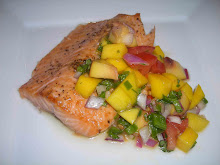
This seafood salad fills both bills. It can be put together in under thirty minutes, perhaps even fifteen if you multitask. If the scallops don’t look good at the market, use all shrimp. If you don’t want to use shellfish, fish or even grilled chicken would work well. We’ve used broiled salmon or mahi mahi (also known as dolphin fish) many times with great success. Perhaps you remember this salmon with fruit salsa.


No mangos? Use peaches, nectarines, cantaloupe or honeydew. Want it spicier? Leave some of the seeds in the chopped jalapeno. If you have a guest who doesn’t like cilantro (and there are definitely some of those), leave it out or use some flat leaf parsley. Just don’t leave out the tomato, onion, or basil. They are the foundation of the salad. After that, almost anything goes.

Do you have foods that people expect to be served when they visit you?


Seared Shrimp and Scallop Salad with Mango Salsa
Adapted from Le Cordon Bleu Complete Cook Home Collection

10 large scallops, preferably dry pack
10 large shrimp, wild caught, peeled and deveined
1 tablespoon extra virgin olive oil
1 tablespoon unsalted butter
Baby lettuce mix, for serving
Mango salsa, recipe below

Dry the scallops and shrimp well. Heat the olive oil in a large, non-stick skillet, add the butter and, when it has melted and starts to foam, put the shrimp and scallops in the frying pan. Sprinkle with salt and freshly ground black pepper and cook for 3 – 4 minutes, or until lightly golden on both sides and just tender to the touch, taking care not to overcook. Arrange a bed of baby lettuce mix on four plates and spoon over the salsa. Top with warm scallops and shrimp, and serve immediately. Serves 4.

Mango Salsa
Adapted from Little Moir’s Food Shack, Jupiter, Florida 

2 mangos, peeled and diced
1 ripe tomato, diced
½ of a red onion, minced
Juice of ½ to 1 lime
1 tablespoon jalapeno pepper, seeded and minced
2 tablespoons rice vinegar (unseasoned)
2 tablespoons minced fresh cilantro
2 tablespoons fresh basil, cut into a chiffonade
1 tablespoon honey
1 - 2 tablespoons extra virgin olive oil
Sea salt & freshly ground black pepper

Place all ingredients in a bowl and gently toss. Serve immediately, or can be left at room temperature for up to an hour. Taste before serving and add more salt, pepper, rice vinegar, honey, or hot pepper to taste if necessary.

Tuesday, March 8, 2011

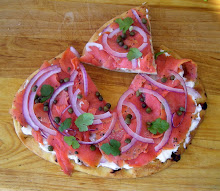
Grilled Bread with Prosciutto Barefoot Contessa Style


This grilled bread with prosciutto recipe is in Ina Garten’s (The Barefoot Contessa) latest cookbook How Easy is That? Ina put it in the cocktails category, but for us it easily was dinner when we combined it with a green salad and a cold beer.

Since the recipe isn’t on the Food Network site yet, I’ll talk you through it below, with a few changes. I used regular fresh mozzarella cheese instead of the fresh smoked one that Ina called for because I couldn’t find smoked mozzarella. Ina grated the cheese, but what I bought was too soft to grate, so I broke it up into bits with my fingers. I also thought the dish needed a burst of fresh flavor, so I added fresh basil leaves in the layer between the cheese and the prosciutto.

Choose a good, sturdy bread and cut it into 6 slices. Grill or toast the bread in a toaster oven on one side until golden. Immediately rub the grilled side with a half of a slice of a large garlic clove. Ina recommends that if you like a real garlicky flavor, rub hard. We thought that the garlic really made it, so don’t skip this step. Drizzle each slice with a little extra virgin olive oil.

Crumble 2 ounces of fresh mozzarella cheese well with your fingers or grate it and divide it into six piles. Tear 2 ounces of Prosciutto de Parma and divide into six piles. To assemble, place one pile of the prosciutto on the grilled side of each bread slice. Slip in a fresh basil leaf or two, and top with crumbled mozzarella cheese. Return the bread to a hot grill or toaster oven to melt the cheese and cook for 1 to 2 minutes more. Remove the slices and drizzle with a little more extra virgin olive oil. Sprinkle with chopped fresh flat-leaf parsley, season to taste with a little kosher salt and freshly ground black pepper, and serve hot.


This is a rich appetizer, both in terms of taste and your wallet. When you are making a dish with only a few ingredients, it’s essential that you use only the finest of ingredients, which is what real Prosciutto de Parma is as opposed to the stuff you find in styro-packs at the grocery store hanging on a rack in the deli. It is also expensive. Combined with the melted mozzarella, this is a very rich and filling dish. As far as easy goes, Ina was right on with that. It took only a few minutes to put it together.

Would we serve it again? As much as I love Ina and trust her recipes and own all of her cookbooks, probably not on this one. The main reason is we felt that the mozzarella cheese overpowered the prosciutto and all we tasted was cheese. If I’m going to buy the good (and expensive) Prosciutto de Parma, I want to savor and taste every morsel. In all fairness, Ina called for prosciutto and did not specify Prosciutto de Parma. But would you really want to use the cheap stuff? Plus, the dish was, in our opinion, too heavy as an appetizer and would spoil your or your guest’s appetite for dinner.

Have you tried this recipe and, if so, what did you think of it?

Monday, February 28, 2011

Do you have seasonal recipes that you forget to serve when the season rolls around?


Do you have seasonal recipes that you love and somehow, when the season rolls around, you forget to serve them? It happens to me more often that I’d like to admit and it took one of you to remind me.

Take this orange salad for instance. I had completely forgotten about it this winter until Chris of Nibble Me This participated in a Culinary Adventure Challenge recently and posted a version of this salad on his blog. He and his wife Alexis gobbled the salad down while he prepared perfectly cooked lamb chops, macaroni, and a Napa cabbage gratin that he says was crazy good to complete the challenge. I owe you Chris. This salad had completely slipped my mind.

Citrus salads are a great substitute for tomato salads when tomatoes are tasteless and not in season. If you’ve a frequent reader, you might remember this salad. I took it to a blogger get-together in Tennessee and later, two of my friends – Larry of Big Dude’s Eclectic Ramblings and Lea Ann of Cooking at the Ranch made versions of it. Larry served it with coconut shrimp and Lea Ann incorporated it into a camping trip. Now Chris has “kicked it up a notch” and used blood oranges (the glamour queen of oranges) and added feta cheese. All in all, this orange salad with its bit of sweet and spicy taste is a winner and goes with many different entrees.


It’s a hastily made, colorful salad that I found in one of Pierre Franey’s 60-Minute Gourmet cookbooks many years ago.  At our house, we call this “Pierre’s salad.” Pierre Franey was a French chef who ran the kitchen at Le Pavillon restaurant in New York City for years. Pierre went on to write newspaper columns for the New York Times, penned some of my favorite cookbooks, and work alongside his dear friend Craig Claiborne, who practically taught my generation how to cook along with Julia Child.

Salade d’Oranges et Olives Noires
Orange and black olive salad adapted from 60 Minute Gourmet by Pierre Franey

1 each large navel orange and tangelo, or two navel oranges
8 black imported black olives, cut in half (I used Kalamata)
1 teaspoon sweet Hungarian paprika
½ teaspoon finely minced garlic
1 tablespoon red wine vinegar
3 tablespoons extra virgin olive oil
1 heaping teaspoon freshly chopped fresh rosemary (optional, but delightful)
Sea salt and freshly ground black pepper to taste
Slivers of red onion
Chopped fresh flat leaf parsley

Trim off the ends of the orange and tangelo. Peel them, then cut into quarter inch slices, and put them in a mixing bowl. Add the olives.

Put the paprika, garlic, vinegar and oil, rosemary, salt and pepper in a jar with a tight lid and shake well to make vinaigrette. Pour the vinaigrette over the oranges and olives and toss well. Sprinkle with slivers of red onions, chopped fresh parsley, and serve. Easily doubled or tripled.

Do you have favorite dishes that you forget from time to time? Please tell me, because I need some reassurance that I’m not alone in this.

Monday, February 21, 2011

Split Pea Soup and a Question


Quite often we’ll have a bowl of soup and a salad for dinner. We love soup and, in fact, this recipe will be the ninth soup I’ve posted since I began My Carolina Kitchen a little over two years ago. Here’s a link to some of our favorites. You might remember that sometimes we like to pass soup in little demitasse cups from a silver tray as an appetizer when we’re having a dinner party. It makes an elegant starter with a glass of wine or champagne and guests are pleasantly surprised by it.

I was talking to a good friend on the phone one day and happened to mention to her that we were having soup and a salad for dinner. “Oh, I could never do that,” she said. “Bob doesn’t consider soup to be a dinner.”  Which brings me to the question - do you consider soup to be a dinner? I’d love to know what you think.

I believe I’ve found a couple of secrets to making a really good soup. It’s how you sauté the vegetables. My mother used to throw the vegetables in without browning them first. While there’s nothing wrong with that and it does save a bit of time, if you brown the vegetables first your soup will have a much richer flavor. The second secret is to add the herbs and a little bit of tomato paste to the vegetables at the end of the browning stage. Here’s what I do. I start the vegetables on high heat, then quickly switch to low, season with salt and pepper, and cook them slowly until they are nice and brown, taking care that they not burn. Then I add the herbs I’m using (thyme and fresh rosemary are my favorites) and a little tomato paste and cook the vegetables for a few more minutes until the tomato paste is blended in and begins to brown.

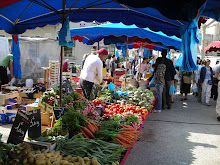
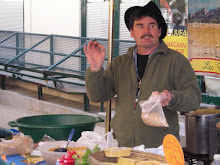
As I write this I so wish we were in Provence right now where I could pop over and buy a crusty baguette from this cute French guy at the farmer’s market. A girl can dream, can’t she?

Market day in Saint Remy-de-Provence, France


Split Pea Soup
From My Carolina Kitchen

1 tablespoon extra-virgin olive oil
1 yellow onion, finely chopped
2 sprigs parsley, diced
2 celery stalks, diced
2 whole carrots, scraped & diced
Kosher salt and freshly ground black pepper
A good pinch of dried thyme and chopped fresh rosemary
1 tablespoon tomato paste
12-oz package of green split peas
6 cups liquid (4 beef broth and 2 water)
1 bay leaf
Browned small chunks of ham for garnish (optional)

Brown the vegetables in a non-stick skillet in the olive oil about fifteen minutes or until well softened and have taken on a golden hue. Season with salt and freshly ground black pepper. Start the vegetables off on high heat and quickly turn the heat to very low, stirring frequently. After the vegetables have browned, add the dried thyme, chopped fresh rosemary, and the tomato paste and stir well. Cook a few minutes more until the tomato paste gets incorporated into the aromatics.

In the meantime put the peas (it’s not necessary to soak split peas prior to cooking) and the broth and water into a large stockpot. After the vegetables have browned, add them the peas along with a bay leaf. Bring to a boil, turn heat to low, cover and cook 1 – 1 ½ hours or until peas are tender. Remove the bay leaf and puree the soup with a wand mixer or in a blender. Add more liquid if necessary and check for seasonings. Garnish with small chunks of browned ham if desired and some crusty French bread.

Cook’s variation:

Sauté onion and carrots over medium high heat, stirring frequently. Add a chopped clove of garlic, 1 teaspoon chopped fresh rosemary, 1 teaspoon sweet Hungarian paprika, a bay leaf, and freshly ground black pepper; cook three minutes. Add tomato paste and 1 tablespoon low-sodium soy sauce. Before serving soup, combine 1 teaspoon olive oil, 1 teaspoon chopped garlic, 2 teaspoons chopped fresh rosemary, and some chopped fresh parsley. Stir mixture into the soup. Spoon soup into individual serving bowls and top with about a tablespoon of sour cream per serving.