Biltmore Estate is a French Renaissance style chateau in Asheville, North Carolina and is referred to as “America’s largest home.” The estate sits on 8,000 acres and was built by
George Vanderbilt at the height of the Gilded Age in the late 1800’s. Biltmore House is the largest privately-owned home in the United States and presents a detailed portrait of what life was like on a great 19th century grand country estate.
At the end of the 19th century, Asheville was a popular health resort where tourists arrived by train to enjoy the mineral springs and fresh air of the southern Appalachian mountains. One of those people was
George Washington Vanderbilt, III, a member of one of the oldest, wealthiest, and best known families in America. He visited Asheville in 1888 as a bachelor with his mother and fell in love with the rugged beauty of the rural mountain setting. George traveled to Europe at age ten and visited Europe, Asia, and Africa numerous times during his adult life. But it was the mountains of western North Carolina that captured his heart.
Since
no photos are allowed inside of the mansion, I hope you will enjoy our photos of the Biltmore’s grand Conservatory and the Walled Flower Gardens. Plants and flowers from the garden were important as decorations for the mansion and a special room was set aside in the basement for a floral design staff.
I’ll give you a little history of the building of the Biltmore and then, because this is a food site,
some insight about how the Vanderbilt’s and their guest dined and what the kitchens were like.
 |
| Conservatory |
In the late 1800’s, land in Asheville was inexpensive and George Vanderbilt began purchasing large parcels, eventually owning 125,000 acres. Here he planned to build his estate, one where he would entertain his friends, but also be a showcase for his priceless collections of artwork and furnishing from around the world. He used the large baronies in Europe as an inspiration to build a profitable, self-sustaining estate to rival those of Europe.
To accomplish this monumental task, George hired two prominent Americans. One was architect
Richard Morris Hunt, who was responsible for the main façade of the Metropolitan Museum of Art in New York and the pedestal for the Statue of Liberty. The other was
Frederick Olmstead, known as the founding father of American landscape architecture. Olmstead designed New York’s Central Park and the grounds of the US Capitol. Together with George Vanderbilt, they designed the Biltmore Estate, a marvel of modern technology that rivaled the greatest manor homes in Europe with the finest architecture, landscaping, and interior design American had to offer.
The Biltmore House consists of 4 acres of floor space, 250 rooms, 33 family and guest rooms, 43 bathrooms, 65 fireplaces, 3 kitchens, a gymnasium, and an indoor swimming pool. It also had central heat, electricity, indoor plumbing, and fire alarms – and this was in
1895. The 125,000 acre grounds contained vast wooded forests, farms, a dairy, and horse stables for the estate, a 250 acre wooded park, 5 pleasure gardens, and 30 miles of rambling roadways.
The Vanderbilt’s entertained lavishly and guests would say for weeks at a time. It was the job of
Edith, George’s wife, whom he met and married in Paris after he built Biltmore, to plan the activities of the day for their guests and work with the domestic staff for meal planning. Quite a job for a new bride wouldn’t you say.
 |
| George & Edith met and married in Paris |
Dinner was formal attire, served in Banquet Hall, the largest room in the mansion. Banquet Hall is 72’ x 42’ with a 70’ barrel-vaulted ceiling and has a long oak table that seats 32 with 2 gilt throne chairs for the hosts in front of a huge triple fireplace. Although massive, the room had perfect acoustics. Two people sitting at opposite ends of the dining table can converse without having to raise their voices. A small, more intimate table is also available in front of the fireplace in case the Vanderbilt’s happened to be dining alone. A smaller dining room off of Banquet Hall serves as a breakfast and luncheon room, where a 6-course lunch was served at one o’clock. The Vanderbilt’s dined on gold-rimmed Minton china, and drank from monogrammed French Baccarat crystal glasses.

As was the custom in country estates, the downstairs level, or basement, served three purposes. It contained the recreation areas, such a gymnasium and indoor swimming pool, that were used for the family and their guests. It also housed bedrooms and common rooms for the domestic staff. But it was also where the real work of the house took place and was designed to keep domestic chores out of sight and sound of the Vanderbilts and their guests.
You could compare the Biltmore’s kitchen complex to that of a large hotel and it was designed for maximum efficiency. There are numerous rooms devoted to pantries, including the housekeeper’s pantry, which doubled as storage and an office for the head housekeeper. As extraordinary as it sounds, there were walk-in food coolers at the end of the 19th century. A separate room was provided for a pastry kitchen to keep it away from the heat. A rotisserie kitchen where pheasant, duck, venison, and other animals brought back from shoot parties, were smoked in an iron rotisserie oven, fueled by wood or coal.

Most of the cooking took place in the spacious main kitchen, which was stocked with the latest culinary equipment available. Large numbers of chefs, cooks, and maids turned out everything from the Vanderbilt’s lavish dinners to a cup of tea for a thirsty guest. Meals prepared in the basement kitchens were transported to the first floor Banquet Hall’s butler’s pantry, where they were transferred onto serving dishes. The servants responsible for this chore were called “tweenies” because they brought food between the kitchen and the dining room. Warming carts were sent upstairs from the downstairs butler’s pantry, which had two dumb waiters, one manual and one electric. The butler’s pantry was also used to store and wash china.
I’ll share an interesting little story about the head chef with you. As I mentioned earlier, the basement also housed recreation areas for guests, including a two lane bowling alley, one of the first in a private home. The rear wall of the bowling alley backed up to the head chef’s quarters. If guests bowled late into the evening, the noise from the pins hitting wall of the chef’s room would keep him awake. During the tour we were told that if that happened, guests could expect a cranky chef the next morning at breakfast.

The basement also contained a servants’ dining room, two laundries, a drying and ironing room, and kitchen staff bedrooms. Other female maid’s rooms were on the fourth floor in the main house and the male domestic staff lived on the second floor of the stable and carriage house. Servants received breakfast, dinner, supper, mid-morning and mid-afternoon snacks daily, with dinner served at 12 noon. The head chef’s assistant prepared food for the servants and a dining-hall maid served their meals. The dining-hall maid was also responsible for keeping the room clean and maintaining all of the servant’s dishes and cutlery. Their meal typically consisted of a soup course, a meat course with vegetables, and dessert. The staff’s supper was around 5 or 5:30 pm, so they were available to prepare and serve the Vanderbilt’s meals later in the evening.

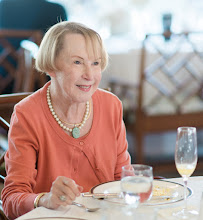
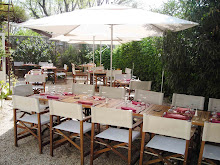
The Vanderbilt’s were gracious hosts and welcomed family and friends to the Biltmore where great attention was paid to each and every detail. We decided to experience what it was like to be a guest of George and Edith Vanderbilt and actually stay on the Estate. We celebrated my birthday by spending the night at the
Inn on Biltmore Estate where we dined in luxury. In my next post I’ll have more about the Inn on Biltmore Estate and our dining experience.










.JPG)