Tuesday, April 28, 2009

Crunchy Un-fried Shrimp


For years fried shrimp was my favorite food when we dined out, primarily because we never fry things at home. Today we still don’t fry foods but I’ve come up with a tasty and easy alternative to frying shrimp. I shallow fried the shrimp in a minimum amount of oil in a non-stick skillet with just enough oil to coat the bottom of the pan without allowing the food to stick. I breaded the shrimp with Panko crumbs. Also called Japanese bread flakes, Panko crumbs are lighter and crunchier than ordinary bread crumbs. They also don’t contain the long list of ingredients that are in regular bread crumbs, such as partially hydrogenated vegetable oil and corn syrup. 

I adapted this recipe from Leslie Pendleton’s Simply Shrimp, Salmon and (fish) Steaks. Her recipe used cornmeal in place of the Panko crumbs and she used a little more oil than I did. We like fried shrimp with lemon wedges so I’ve added those also. I also put several dashes of hot sauce in the eggs which I saw Paula Dean do and liked the results so much that I’ve added Tabasco to my egg coating mixture for any recipe calling for an egg wash. It gives a dish subtle flavor without being overwhelming. If you are looking for new ideas for fish and shrimp, Leslie’s book is terrific. 

My husband Meakin makes a fresh red cocktail sauce that we serve alongside the shrimp with some lemon wedges. Making your own cocktail sauce is quick, easy and has a much fresher taste than the bottled variety.

Panko Crusted Shrimp - Crunchy Un-fried Shrimp
Printable Recipe

Adapted from Leslie Pendelton's Simply Shrimp, Salmon and  (fish) Steaks

1 lb. large raw shrimp, peeled and deveined
Kosher salt
Freshly ground black pepper
2 large eggs
Several dashes of hot sauce, such as Tabasco  
¼ cup cornstarch
½ cup Panko bread crumbs
Canola or peanut oil 
Lemon wedges
Red cocktail sauce if desired

Lightly salt and pepper the shrimp. In a shallow dish, beat the eggs lightly with a little bit of water and add several dashes of hot sauce. Put the cornstarch and Panko bread crumbs in separate dishes or on separate sheets of waxed paper. Dip each shrimp in cornstarch, then egg, and then bread crumbs.

In a large 12” non-stick skillet, heat 2 to 3 tablespoons of oil over moderately high heat until it is very hot, but not smoking. Add some of the shrimp to the skillet, leaving plenty of room between them, and cook for 1 to 2 minutes on each side, turning once, until they are crisp and cooked through. Transfer to brown paper to drain and sprinkle with salt. Cook the remaining shrimp. Serve immediately with lemon wedges and red cocktail sauce. Serves 4 as an appetizer or 2 as an entrée.

Meakin’s Red Cocktail Sauce
Printable Recipe

Be sure to zest the lemon before squeezing the juice

4 tablespoons ketchup
2 tablespoons bottled chili sauce
Zest from ½ of a lemon or lime
Juice from ½ of a freshly squeezed lemon or lime 
1 heavy teaspoon bottled horseradish
2 dashes hot sauce such as Tabasco or Thai Chili sauce
2 big dashes Worcestershire sauce
2 tablespoons very finely chopped celery
1 tablespoon finely chopped fresh Italian flat-leaf parsley
One small tomato, seeded and finely chopped

Mix ingredients in a small bowl. Cover and refrigerate for an hour or up to 6 hours before serving.

Monday, April 20, 2009

French Rose Wine from Provence, Chateau Romanin and La Cave du Mas de Longchamp

Rose wines of Provence


Provence is the birthplace of fresh and fruity rose wines. Vines have existed there since the fourth century BC but it was the Greeks and Romans who introduced grape growing techniques to the area. The original wines were similar to today’s roses that have come to symbolize Provence. Rose is an easy going wine served as an aperitif in France but equally at home with a typical Mediterranean meal. Half of the rose wine made in France comes from Provence and eighty percent of the wine made in Provence is rose.


Many times we would be sitting on our stone terrace enjoying a glass of rose in the spring of 2007 and look up to see white gliders doing ballets in the clear almost cloudless skies overhead. Intrigued with the thoughts of gliding high above the Alpilles in France, my husband inquired as to where he might rent one since he is a private pilot and we had our own plane for many years. We were told that there was a gliding club aerodome nearby on the grounds of the vineyards at Chateau Romanin.

Chateau Romanin

Underground cathedral at Chateau Romanin


Chateau Romanin is a wine growing estate with an old castle from the Middle Ages with 58 hectares of vines located in a gap that forms into a “V” on the northern slope between Saint-Remy-de-Provence and the charming tiny village of Eygalieres. This “V” creates natural updrafts allowing easy takeoffs in gliders as well as protecting the vines from disease and frost. The vineyards are spread around the aerodrome.


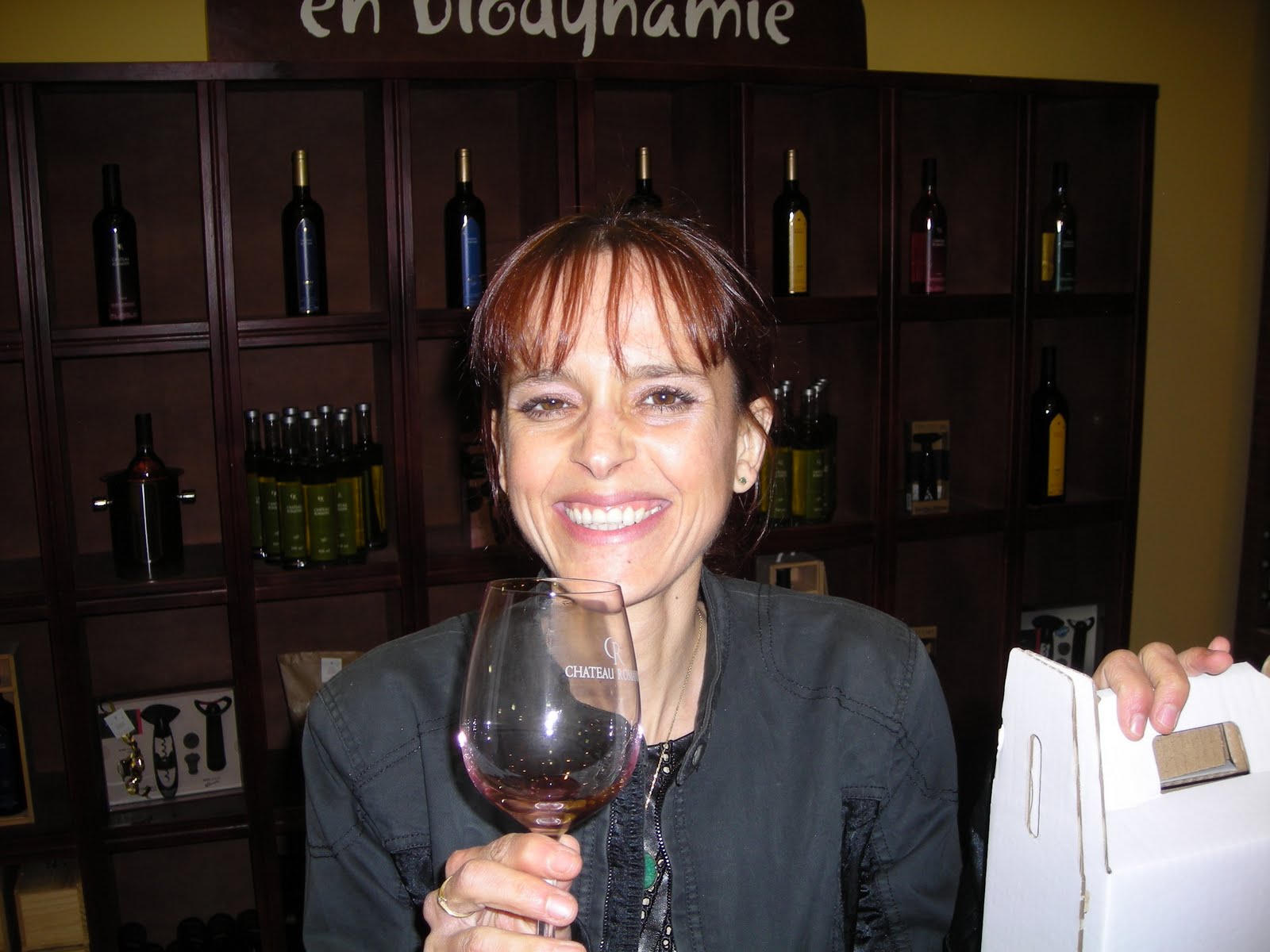
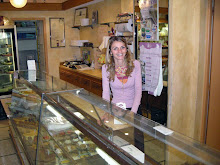
One look at the tiny gliders with one small seat in front for the pilot and another in the back for the passenger told him he was likely to experience claustrophobia, so we came up with a new plan and proceeded to tour the winery and enjoy the degustation (free tasting) offered by the lovely French mademoiselle. Although tastings are generally free in France, it’s expected that you will buy a couple of bottles.


More vineyards in the springtime in the Alpilles region of Provence


La Cave du Mas de Longchamp’s local Vin de Pays rose wine

For years we had heard stories about people taking an empty wine bottle to a winery in France and getting it filled with a Vin de Pays (local wine) and longed to have the same experience. Our caretaker suggested we try La Cave du Mas de Longchamps in nearby Molleges. We were delighted to discover that we could purchase their fruity rose for 1.65 Euros a liter and fill our own jug.

Madame Benoit, the owner’s wife, filling our plastic jug


My husband Meakin giving it a try


Monday, April 13, 2009

Premio Dardos Award, Life is Meals and remembering our first Chateau Lafite-Rothschild wine


Vicki Lane, mystery writer and author of the Elizabeth Goodweather Appalachian Mysteries, passed the Premio Dardos Award to me. This award is for “recognition of cultural, ethical, literary, and personal values transmitted in the form of creative and original writing. These stamps were created with the intention of promoting fraternization between bloggers, a way of showing affection and gratitude for work that adds value to the Web." Thank you very much Vicki for this prestigious award.

Currently Vicki is at work on her fifth novel. In addition to being a published author, she is a wonderful photographer and an accomplished gardener. I urge you to stop by her blog, Vicki Lane Mysteries.


Each morning I read a daily passage from Life is Meals – A Food Lover’s Book of Days. This charming book by James and Kay Salter makes a wonderful hostess gift. It’s a memoir filled with food history and facts, favorite cookbooks, dinner parties and friends, fond food memories, restaurant stories, household tips and recipes. Broken into 365 brief entries, you can dip in and out as you like. After reading this book I now have come to believe that my family may be related to Winnie the Pooh. Here are some examples.

March 28

“When you wake up in the morning, Pooh,”
Said Piglet at last, “what’s the first thing you say to yourself?”
“What’s for breakfast?” said Pooh, “What do you say, Piglet?”
“I say, I wonder what’s going to happen exciting today?” said Piglet.
Pooh nodded thoughtfully. “It’s the same thing,” he said.
A. A. Milne, Winnie the Pooh


March 10
Paraphrased from Theo’s Birth

1985 in Paris Kay Salter gave birth to their son Theo. Jim had read once that the lips of the future kings of France were moistened at birth with a good French wine so they would always remember the taste. Being the bon vivant that he was he purchased a bottle of Chateau Latour for the occasion. As Kay was being wheeled into the delivery room Jim took a moment to speak to their French obstetrician, Dr. Bazan, who had been summoned from a dinner party and was still wearing his evening clothes. Jim explained that when the baby was born they would like to wet its lips with the wine. Things proceeded as expected and at one in the morning Jim was standing outside the delivery room when he heard the cry of an infant followed by, “Pull the cork,” from Dr. Bazan. A few drops of wine were applied to Theo’s lips and then the remainder of the bottle was shared by Jim, Kay, the doctors and the nurses in celebration.

Later the Salters purchased a case of another fine Bordeaux, Chateau Leonville-Barton 1985, the year of Theo’s birth. When Theo was old enough to drink, they asked hopefully, “Recognize the taste?” He looked as if he did.


Speaking of fine wines, my husband and I lived in Houston during the seventies. His mother had told him to always buy the least expensive house in the very best neighborhood. Good advice even today. We bought a darling one bedroom cottage on an acre in the close in Memorial area, east of Voss Road; a very fine neighborhood indeed. We were visiting with our neighbor one day and he asked if we liked wine. We were young and thought we knew a little bit about wine so we said yes. He invited us to dinner the following Saturday.

Before dinner he took us to his wine cellar for a sherry he had blended himself. If you aren’t familiar with Houston, cellars are a bit of a rarity there. He had his built for his wine collection, which was quite vast and contained many bottles of rare vintages. In fact during that time Tony’s, one of Houston’s finest restaurants, would occasionally call to borrow a bottle from him if a customer ordered something from their wine menu that they happened to be out of.

At the dinner table were three wine glasses at each place setting. He and his wife announced that we would be doing a wine tasting of three vintages to taste the difference in them. Much to our surprise (and delight) on the table sat a three bottles wine, a Chateau Lafite-Rothschild 1962, a 1964 and a 1966. Needless to say all three were excellent and the finest wine we’d ever tasted. We did our best to carry on a conversation about fine wines as if we knew something, which we really didn’t. As the evening progressed he excused himself and went back to the cellar and brought up another bottle of wine. This time it was a Chateau Duhart-Milon-Rothschild 1964. He explained that the Duhart vineyard was across the street from the Lafite but because it wasn’t labeled a Lafite, it was less expensive. It was every bit as good as the Lafite in our eyes as well as his and he was the expert. They graciously gave us the labels from the four wines, which we framed and they still hang in our kitchen today.

Do you have any food books you read frequently? If you do, I hope you’ll share the titles with me.

Wednesday, April 8, 2009

Asparagus is perfect for an Easter buffet


Asparagus Goldenrod is an elegant, easy to prepare dish that can be made ahead of time. It’s perfect for an Easter buffet and is a terrific dish served with baked ham. Basically it is poached asparagus, served cold with a light vinaigrette sauce and garnished with grated hard-boiled eggs. The name Goldenrod comes from the bright green asparagus garnished with yellow egg yolks. Classic dishes such as this were a mainstay on the menus of the grand hotels in a bygone era. It’s also known as Asparagus Mimosa because the grated hard-boiled eggs resemble mimosa blossoms.    

This recipe was in my Easter food column for the newspaper. We’ve made this classic dish for years but I was inspired by Sara at Sara’s Kitchen. She dressed hers up a bit with radishes, which gave it a nice crunch and made the presentation spectacular.

The preparation is simple, it takes only a few minutes to make and can easily be doubled or tripled to suit a crowd. Served on a platter it is a stunning looking dish that will elicit wows from your guests. The key is not overcooking the asparagus or the eggs.  I like to flavor my asparagus water with beef broth. It isn’t necessary but it does bring a nice flavor to the cooking broth. 

1 ½ lbs asparagus, tough lower ends snapped off
2 teaspoons salt
Beef broth
2 tablespoons tarragon vinegar, if not available use freshly squeezed lemon juice
1 tablespoon finely chopped shallot
1 teaspoon Dijon mustard
Dash of hot sauce such as Tabasco
6 tablespoons extra virgin olive oil
Salt and freshly ground black pepper to taste
2 hard-boiled eggs at room temperature

After tough ends of asparagus have been removed, peel the remaining ends unless the asparagus is thin; if thin leave as is. Bring water flavored with beef broth and 2 teaspoons salt to a boil in a shallow pan. Add asparagus, turn heat to low and cook for about 4 minutes until asparagus is crisp tender, taking care not to overcook. Immediately plunge the asparagus in an ice water bath to stop the cooking and retain the green color. After a minute or two remove and dry well with a towel. Chill for about an hour.

To make the vinaigrette, put the vinegar, shallot, mustard, hot sauce and olive oil in a screw top jar with a lid and shake well to mix. Season with salt and freshly ground black pepper to taste.

Separate the egg yolks from the whites and grate each, separately, on the coarse setting of a cheese grater. Arrange the asparagus on a platter and drizzle with the vinaigrette. Decoratively arrange the egg whites and yolks on the asparagus. Serves 4.


Katherine at Smoky Mountain Café has passed the Adorable Blog Award to me. Katherine was originally from New Orleans but Hurricane Katrina blew her family up to East Tennessee. Smoky Mountain Café is a very professional food blog filled with great recipes and photographs. Louisiana’s loss is definitely Tennessee’s gain. Thank you Katherine very much for this adorable award. 

I happily pass the Adorable Blog Award to Joie de Vivre and Tangled Noodle. They have done a fabulous job of reviewing a wonderful book, Mindless Eating. I bought the book and have been reading along with them. I’ve discovered so many things about how we eat, why we eat, and what makes some foods more enjoyable than others. Thank you for bringing this great book to my attention. My husband and I have learned so much good information that we are putting to good use in our daily food and drink choices. You both are truly adorable. 
Friday, March 27, 2009

The Boucherie and the Supermarche in Saint-Rémy-de-Provence, France


Our favorite Boucherie in Saint-Remy was Chez Marc & Maryse. They were a butcher shop as well as a Charcuterie, a pork butcher. We had peeked in the front window of Boucheries on our previous visits to France but had never actually ventured inside because we weren’t staying where we could cook. On this trip we rented a house for two months because our top priority was to have our own kitchen so we could experiment with the wonderful foods in the market and shops. 


We bravely entered their shop armed with a handwritten note of what we wished to purchase, written in French. We wanted to make our own steak tartare, a raw beef mixture seasoned with parsley, onions, mustard, capers, anchovies and a raw egg yolk, and serve it for dinner on the crusty French baguettes we had purchased earlier in the day. Inside we found a tiny shop with showcases filled with all sorts of beautiful meats, cheeses, pates, and daily specials of already prepared meals to take out. 


Marc was busy behind the counter rolling and tying a gorgeous crown roast for a customer. There were two other patrons in the shop so our turn would come after theirs. It was a surprisingly long wait because Marc was alone in the store and he pays his full attention to the current customer and everything is cut and prepared to order. The wait was far from unpleasant because it gave us time to ooh and ah over the gorgeous variety of pates, meats and cheeses in the case. We admired the beautifully larded and decorated prepared roasts, the filets of lamb and the brochettes of beef with tomatoes. In the poultry case there were the famous Bresse chickens. Bresse is a breed of chicken highly valued for their rich gamey flavor yet tender flesh. World gourmet experts consider the Bresse chicken the best tasting in the world. Demand is so high that few make it outside France. There was lapin, French rabbit and canette, female ducklings.

When our turn came my husband said, “Bonjour monsieur. Parlez-vous anglais?”  hoping Marc spoke some English.  In some of the other shops in town we usually got the answer, “Oui, un peu, a little.” No such luck here. “Non, monsieur,” Marc said.


My husband said no problem. He then bravely proceeded in his very best French, “Je voudrais un demi kilo boeuf hache, s’il vous plait,” and crossed his fingers that Marc would understand that we wanted a pound of ground beef and at the same time not ask us a question in return that we wouldn’t understand. Marc carefully patted the ground beef into a beautifully formed patty, placed it on a piece of white butcher paper and proceeded to weigh it. My husband reached over and took a pinch of the meat and ate it, hoping to indicate to Marc that we planned to eat it raw. Marc understood, then said something in French which we didn’t understand, reached in the counter and handed my husband a pinch of another ground meat for us to try. He called it “keffte” and it was his special house blend of steak tartare. It was nicely seasoned and very similar to how my husband makes his. We made a mental note to buy Marc’s house blend on our return visit.


We tried all of the different pates Maryse made. She had a gorgeous assortment of traditional French pates. Some were whipped smooth and contained the finest of goose and duck foie gras with other luxurious ingredients such as wine, port, or smoked salmon. Others were pork-based country style pates flavored with piquant black pepper. They were so beautiful that one day we asked her if she had studied at The Cordon Bleu, the prestigious culinary school in Paris. “Non monsieur,” she said as if everyone in France made fancy pates such as these. By the same token I could tell she was flattered by our comment. 

She also prepared daily take-out specials which were quickly gone by noon. A couple of times we were lucky enough to find ris de veau, sweetbreads, as the special. They were out of this world in her light cream sauce. Lasagna was also a frequent special, which surprised us until we remembered how close to Italy that Provence actually is. In fact, from Provence you can easily drive to Nice and back in one day. Nice was once part of the Italian Riviera and didn’t join France until 1860.


We went to Marc and Maryse’s shop at least three times a week during our two month stay. Often, but not always, another customer in the store spoke a little English and could help Marc understand what we were trying to say. Our French continued to improve and we felt more comfortable ordering in French. We learned that the wait could be long because Marc devoted his entire attention to one customer at a time and we planned accordingly. One day Marc put stemmed wine glasses on the counter, popped the cork of a local Cote du Rhone wine, poured three glasses and we toasted to our new friendship. When we returned home at Christmas we sent them a card with a handwritten note in French wishing them Joyeux Noel and saying how much we enjoyed getting to know them. Much to our surprise, a card from them appeared in our mailbox in North Carolina, written somehow in English, wishing us a Merry Christmas along with a short note thanking us for our friendship - a touching and very special moment for us. Whoever says the French aren’t nice to Americans doesn’t know what they are talking about.


The Supermarche in Saint-Remy was the equivalent of our supermarket. Compared to most of the charming shops in Provence, it’s not much to look at from the outside. One of the first things you notice is that the shopping carts are outside and chained to each other. Puzzled, we paused and watched as the lady in front of us inserted a euro in the slot and her cart came free. We proceeded to do the same and followed her inside of the store with our cart. 


Once inside we passed through a selection of clothing, books and music on our way to the food section. Many of the aisles looked similar to a US supermarket with cereals, coffee, canned goods, bottled waters, laundry detergents, paper products and the like. On one aisle we saw a huge selection of Nutella, a creamy, chocolaty hazelnut spread, in every size imaginable. We learned later that Nutella spread on a slice of baguette is the snack of choice of many French children when they return home from school in the afternoon.

The produce section was large and offered a nice selection, but the fruits and vegetables paled in comparison to the beauty of the fresh produce brought by local farmers to the weekly outdoor market downtown in the square. However, it was fun to use the tongs to select your baby lettuces from the basket as opposed to buying it in a prepackaged plastic bag like we do in the US. Everything was priced in kilos, which at first glance seemed high until we remembered that a kilo is two pounds.


The fish market was our favorite spot in the Supermarche. As you can see from the picture, a lot of the things were out in the open, iced down for display. All very enticing with exotic offerings from the nearby Mediterranean Sea.

When we finished shopping we headed for the check-out line which was a real learning experience. For one thing French checkers are tres vite, very fast, and voila, before you know it, your purchases have been pushed to the end and it’s time to bag and pay. Here you must bring your own bags and bag your own. I purchased a large, sturdy straw market bag with leather handles so I would feel French just for the purpose, but unfortunately I wasn’t a tres vite bag person, which could tend to be embarrassing at times as a foreigner. But, with a good attitude, I didn’t let that stop me from shopping at the Supermarche. After all, we came to France to enjoy the food. 

Afterwards, you take your shopping cart back out to the parking lot and return it to the cart line. As soon as you push the cart in, out pops your euro. Tres cool. It was a very clever way the French controlled the shopping carts and kept their parking lot tidy. US supermarkets could take a lesson from the French when it comes to shopping carts. 


There were many funny things as well as some embarrassing moments that happened to us on this trip, but the one in the Supermarche probably takes first prize. 

One day our shopping list was short so we decided to skip picking up the cart in the parking lot and instead use one of the hand held plastic baskets inside the store. Everything worked perfectly fine until it was time to check out. I didn’t know that I should have placed the plastic basket down in the bin provided at the beginning of the check-out counter. Instead I took the basket to where our groceries were accumulating from being checked. All of a sudden a very loud alarm went off and everyone started looking at me, including customers. The checker said something fast in French that sounded very much like a scolding and wagged her finger at me. That’s when I realized I’d done something terribly wrong and the alarm was going off because of me. As quickly as I could say, “Je suis desole,” she snatched the plastic basket, stomped around the counter and deposited it at the beginning of the check out line where I should have put it in the first place. I continued to say desole over and over again to no avail. Apparently the basket set off the alarm. Believe me, it’s important to know how to say “I’m sorry” in a foreign language and, I might add, have a good attitude . In fact I rank knowing how to say I’m sorry right up there with knowing how to ask where the bathroom is.   

I hope you can join us next time as we visit a winery as we reminisce about our 2007 culinary adventure to Provence. Until then, a bientot.